Top Benefits of Lining Fabric for Different Types of Clothing and Projects
Lining fabric plays a crucial role in the textile industry, significantly enhancing the quality, durability, and aesthetic appeal of various garments and projects. According to the Global Textile Industry Report, the market for lining fabrics is expected to grow by 4% annually, driven by the rising demand for high-quality apparel across different segments, including fashion, sportswear, and workwear. This growth underscores the significance of lining fabric in achieving superior garment construction and functionality.
One of the primary benefits of lining fabric is its ability to provide additional comfort and protection to the wearer. A well-chosen lining enhances the drape of the outer fabric, contributing to a polished overall appearance while simultaneously preventing irritation from seams and rough edges. Furthermore, lining fabrics can improve the thermal properties of a garment, making them essential for outerwear and formal garments that require a sophisticated finish.
Moreover, the versatility of lining fabrics enables their use in a myriad of projects beyond clothing, including upholstery, curtains, and accessories. According to a study published by the International Textile and Apparel Association, incorporating quality lining fabric can increase the lifespan of products and improve user satisfaction, ultimately leading to reduced waste and increased sustainability in the fashion industry. As designers and consumers alike increasingly recognize these benefits, the importance of quality lining fabric only continues to rise.
Benefits of Lining Fabric in Garment Construction
Lining fabric plays a crucial role in garment construction, enhancing the overall quality and functionality of clothing. One of the primary benefits of using lining is that it provides a smooth inner surface, which helps garments slip on and off easily. This is particularly important for fitted clothing where the inner seams may otherwise create discomfort against the skin. Furthermore, lining helps garments maintain their shape and structure, preventing distortion in areas that experience stress and wear, such as shoulders and waistlines.
In addition to practical advantages, lining fabric also contributes significantly to the aesthetic appeal of a garment. It can provide an opportunity for an additional layer of color or texture, allowing designers to create visual interest without compromising the outer fabric's design. Moreover, lining acts as a barrier against external elements, such as humidity and temperature fluctuations, which can protect the outer fabric from damage, ensuring longevity. Overall, the benefits of lining fabric in garment construction are multifaceted, positively influencing both the fit and aesthetics of clothing while promoting durability.
Top Benefits of Lining Fabric in Garment Construction
Types of Lining Fabrics and Their Specific Applications
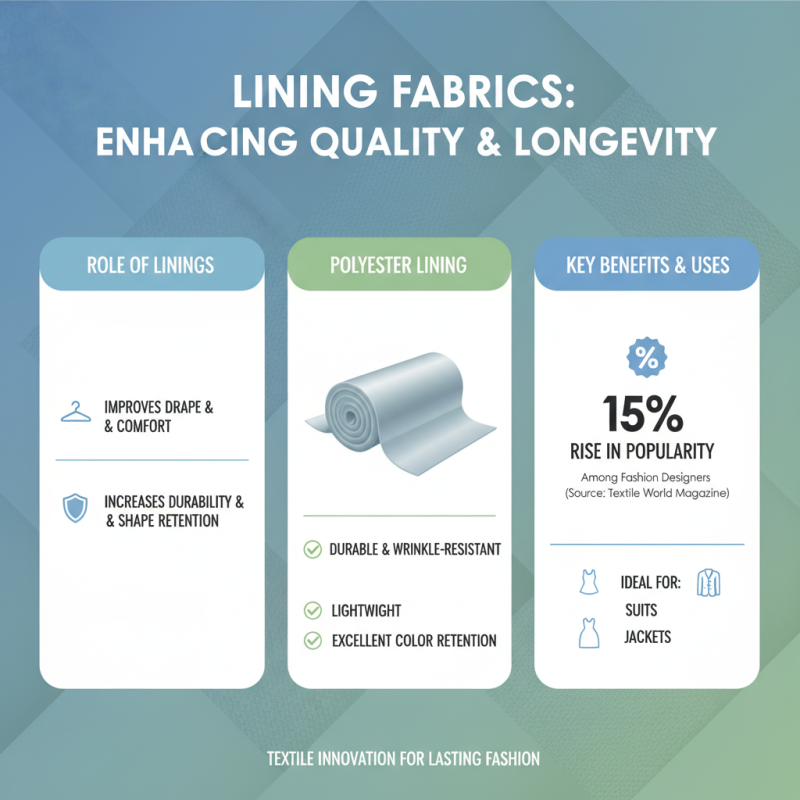
Lining fabrics play a crucial role in enhancing the quality and longevity of various clothing items and projects. There are several types of lining fabrics suited for specific applications, each offering unique benefits. For instance, polyester lining is widely used in garments due to its durability and resistance to wrinkling and shrinking. According to the Textile World magazine, polyester linings have gained approximately 15% popularity among fashion designers for their lightweight properties and color retention, making them ideal for dresses and suits.
Another common lining fabric is silk, particularly favored for high-end apparel. Its natural breathability allows for moisture-wicking, making it an excellent choice for summer garments. A report from the Journal of Textile and Apparel, Technologies and Management indicates that silk linings can enhance the drape and overall comfort of clothing, leading to an increase in consumer preference for garments featuring silk linings. Furthermore, specialty linings like cotton or spandex blends are utilized for specific purposes such as stretchability in activewear or added comfort in everyday clothing items.
When it comes to outerwear, heavier linings like quilted fabrics or fleece are employed to provide insulation and warmth. The American Textile Manufacturers Institute notes that garments with insulated linings see a 20% increase in sales during colder months, highlighting the importance of choosing the right lining fabric not merely for aesthetics but for functional benefits. Understanding the specific applications of various lining fabrics helps designers meet their customers' needs while optimizing the overall performance of their clothing items.
Enhancing Comfort and Fit with Lining Fabrics
Lining fabrics play a crucial role in enhancing the overall comfort and fit of clothing. By providing an additional layer between the skin and the outer fabric, linings help to eliminate scratchiness and improve breathability. According to a report by the Textile Research Journal, garments with proper lining can reduce skin irritation by up to 30%, making them more suitable for daily wear. This is particularly important for individuals with sensitive skin, as well-fitted, lined garments can significantly increase comfort levels throughout the day.
When selecting lining fabrics, it is essential to consider the specific type of project. For instance, lightweight linings, such as cotton or silk blends, are ideal for summer garments where breathability is paramount. Conversely, heavier linings, like polyester or wool, can provide warmth and structure to winter clothing. A study from the International Journal of Fashion Design, Technology and Education highlighted that proper lining choice not only enhances comfort but also contributes to an improved fit and silhouette of the garment.
**Tips:** Make sure to choose a lining that complements the outer fabric in both weight and texture. Testing for compatibility can lead to a more seamless finished product. Additionally, consider the garment's intended use; for everyday wear, prioritize comfort, while formal wear may benefit from more structured lining to maintain shape.
The Role of Lining Fabrics in Improving Durability
Lining fabrics play a crucial role in enhancing the durability of clothing and various projects. By acting as a protective barrier, lining fabrics shield the outer material from wear and tear, helping garments withstand the rigors of daily use. For example, when used in tailored jackets, the lining helps prevent the outer fabric from fraying at the seams while also providing a smooth silhouette. This not only extends the life of the garment but also ensures it retains its shape and structure over time, making it an essential component for any quality piece of clothing.
When selecting lining fabrics, consider opting for options that complement the outer material, both in weight and texture. Lighter fabrics such as silk or polyester can be ideal for summer garments, providing breathability while minimizing bulk. On the other hand, heavier linings, such as cotton or wool blends, are perfect for winter wear, offering additional warmth and structure.
Tips for working with lining fabrics include pre-washing them to avoid shrinkage later on, and using interfacing where additional support is needed, especially in areas like collars and cuffs. Additionally, ensure that the lining is properly stitched to the garment to avoid slipping, which can lead to an uneven appearance. These simple practices can significantly enhance the durability and overall quality of your clothing projects.
Creative Uses of Lining Fabrics in Home Décor Projects
Lining fabrics have long been staples in garment construction, but their versatility reaches far beyond clothing. In home décor projects, lining fabrics can serve as a fantastic way to add structure, color, and interest to a variety of designs. For instance, when creating curtains, using a lightweight lining fabric not only enhances the aesthetic but can also improve light control and insulation, making your living space more comfortable. Additionally, employing lining in cushion covers lends a finished look, allowing the outer fabric to drape beautifully while concealing any raw edges.
Tips for incorporating lining fabric into home décor projects include choosing a breathable fabric for curtains to prevent moisture buildup, which can lead to mold. When making pillows, consider a contrasting or coordinating lining to add a surprising pop of color when the pillow is flipped or moved. Additionally, lining can be used in upholstery work; adding a layer of lining fabric beneath the outer fabric provides extra durability and an added touch of luxury while disguising any imperfections in the underlying material.
Another creative avenue is using lining fabric in light fixtures. By lining the inside of lampshades, you can amplify the glow from the light bulb and bring warmth into a room. This technique not only enhances the design element but can also tie together various colors and patterns within your space. When working on unique home projects, lining fabrics can be a game-changer, allowing for a seamless blend of functionality and style.