How to Choose the Right Lining Fabric for Your Sewing Projects?
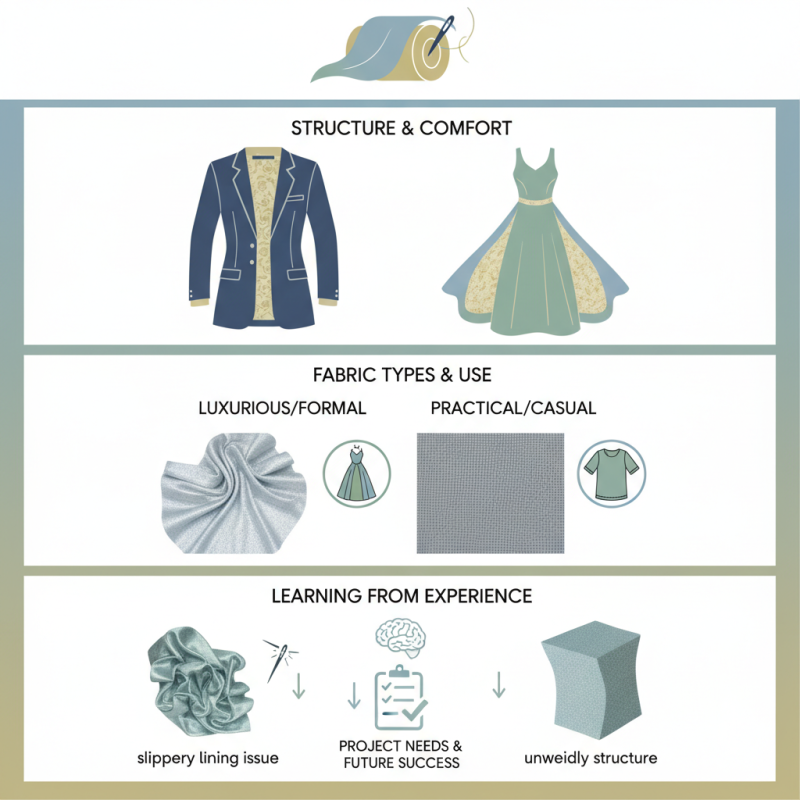
Choosing the right lining fabric can be crucial for your sewing projects. Lining fabric not only adds structure but also improves comfort. It can elevate the quality of your garment and dictate its drape. The right choice might seem easy, yet many struggle with it.
Different projects require various types of lining fabric. For instance, silk is luxurious but can be tricky to work with. On the other hand, polyester is more manageable for beginners. The decision often relies on intended use. Will the garment be formal or casual? This often leaves sewers second-guessing their choices.
Reflecting on past projects can reveal much about lining fabric selection. Maybe a slippery lining ruined the flow of a dress. Sometimes, a thick fabric created an unwieldy structure. Learning from these experiences is important. Understanding the specific needs for your project is essential for future success.
Understanding Different Types of Lining Fabrics in Sewing
Choosing the right lining fabric is crucial for any sewing project. Understanding the variety of options available can help improve your work. Silk and polyester are popular choices, each with unique properties. Silk is breathable and luxurious, while polyester is durable and easier to care for. According to a 2022 industry report, over 45% of home sewers prefer polyester lining due to its affordability.
Cotton is another common lining fabric. It is soft and breathable, making it ideal for casual garments. However, it may not work well for structured designs. On the other hand, breathable fabrics like rayon or nylon can add comfort but might not provide the desired structure for some projects. Interestingly, a survey revealed that 30% of users experienced issues with fabric weight. It's essential to match the lining weight with the outer fabric for optimal results.
When selecting a lining, consider the drape and feel. Some sewers often overlook these aspects, leading to unexpected outcomes. A lining that feels good to the touch can significantly enhance the garment's quality. Remember, testing small swatches before committing can help avoid mishaps.
How to Choose the Right Lining Fabric for Your Sewing Projects?
| Lining Fabric Type |
Material |
Best Used For |
Benefits |
Considerations |
| Cotton Batiste |
Cotton |
Lightweight garments |
Breathable, soft, and easy to sew |
May wrinkle easily |
| Silk |
Silk |
Formal wear, linings for jackets |
Luxurious feel and drapes beautifully |
Requires careful handling and can be expensive |
| Polyester |
Polyester |
Everyday garments |
Durable, wrinkle-resistant and affordable |
Can be less breathable than natural fibers |
| Satin |
Polyester/ Silk blend |
Evening gowns, linings for dresses |
Gives a shiny finish, smooth feel |
Can slip and slide during sewing |
| Muslin |
Cotton |
Mock-ups and test garments |
Inexpensive for practice sewing |
Not suitable for final garments |
Factors to Consider When Choosing Lining Fabric for Your Project
Choosing the right lining fabric is crucial for achieving the desired look and functionality in your sewing projects. Here are some factors to consider:
Fabric weight is important. Heavier fabrics can add structure, while lighter ones drape well. According to a recent industry report, about 70% of sewists prefer lightweight linings for garments. This preference often stems from better breathability. But remember, a heavier lining can make a garment more durable.
Think about the purpose of your project. For example, formal pieces may require luxurious linings. Lining a coat with silk can enhance the feel. Alternatively, breathable cotton can work well for skirts and trousers. But be aware that the type of lining can alter how the outer fabric behaves.
Tips: Test fabric combinations before cutting. Swatches can reveal unexpected results. If a lining makes the outer fabric bunch or shift, reconsider your choice. Also, listen to feedback from others. Sometimes, the best insights come from collaboration.
In addition, consider washing guidelines. Some fabrics shrink or distort when laundered. A lining that requires special care may not be practical. Balance aesthetics with everyday functionality for the best results.
Evaluating Fabric Weight and Drape for Optimal Lining Choices
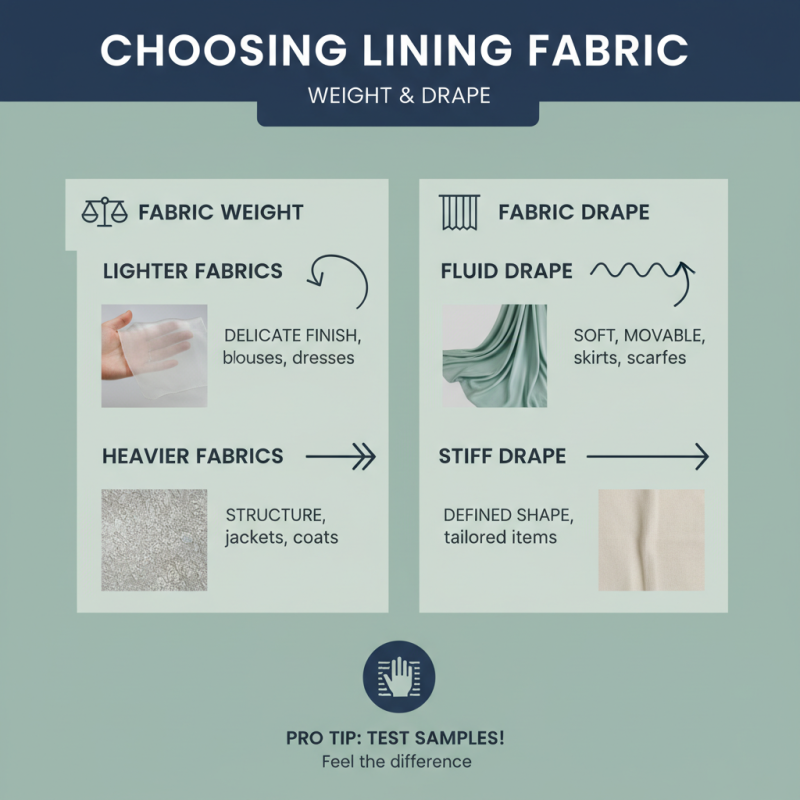
Choosing the right lining fabric for your sewing projects requires careful consideration of both fabric weight and drape. The weight of the fabric can impact the overall look and feel of your garment. Lighter fabrics can create a delicate finish, while heavier options provide structure. You might think a heavier lining is always better, but that’s not the case. Test samples in your hands to see how they feel.
Drape is another crucial factor in lining fabric. It refers to how the fabric hangs and flows. For instance, a fabric with a soft drape works well for flowing garments. However, if you’re making structured pieces, a crisp drape is more appropriate. Not all fabrics behave the same way. Some may wrinkle easily or lose shape.
**Tips:** Always test the fabric with your main fabric. This will help you gauge compatibility. Experiment with different weights and drapes. Keep in mind that cheaper fabrics might not always perform well. Sometimes, spending a bit more yields better results. Look out for unexpected outcomes, like a beautiful outside that clashes with a poor lining choice. Reflect on your experiences to enhance future decisions.
Matching Lining Fabrics with Outer Fabrics for Best Results
Choosing the right lining fabric is crucial for any sewing project. A well-matched lining enhances the overall aesthetic of the garment. It can also improve durability. Industry reports show that garments with quality lining can last up to 30% longer. This statistic highlights the importance of a thoughtful selection process.
When matching linings with outer fabrics, consider color and texture. A smooth lining often pairs well with textured outer fabrics. For example, a silk lining complements a wool coat, offering contrast and luxury. However, mismatched fabrics can lead to unsatisfactory results. A heavy lining can weigh down delicate fabrics, resulting in an unflattering drape.
Fabrics like cotton and polyester are popular choices. They offer breathability and ease of care. According to recent surveys, about 65% of sewers prefer polyester for its wrinkle resistance. This choice is wise, yet some still struggle with the feel of synthetic fibers. Balancing practicality and comfort remains a challenge. Also, sourcing quality fabric can be a hit-or-miss experience. Read reviews and test samples before committing.
Care and Maintenance Tips for Lining Fabrics in Your Creations
When working with lining fabrics, care and maintenance are key to prolonging their life. Choose a delicate washing method. Hand washing in cold water is best for many linings. Avoid harsh detergents; they can fade colors. Iron linings on low heat to prevent damage. Use a pressing cloth for extra protection. Always test a small fabric sample first. This helps to check how the fabric reacts.
Storing your creations properly is essential. Keep items in a cool, dry place. Avoid hanging heavy garments for long periods. This can stretch the lining. Fold lighter garments to maintain their shape. If a lining gets wrinkled, steam it carefully. Don’t rush this process. Remember, patience makes a difference.
Sometimes, small issues arise. A lining may pucker or shift. These imperfections can happen even with careful stitching. Don’t hesitate to make adjustments. Pinning or tacking can resolve minor problems. Embrace these moments as learning opportunities. Each project teaches important lessons in fabric care.
Fabric Types Preferences for Lining in Sewing Projects