What Is Free Fabric and How Can Buyers Source It?
Free Fabric sounds simple: material offered at no purchase price. In practice, the term covers fabric samples, mill offcuts, deadstock, donated rolls, and surplus inventory. A buyer may receive a small cotton swatch, a 20-metre polyester lot, or mismatched rolls from a cancelled order. Each source carries different quality, documentation, and delivery risks.
The scale of textile production explains why these materials exist. Textile Exchange’s Materials Market Report 2024 estimated global fiber production at 124 million tonnes in 2023. It projects production could reach 160 million tonnes by 2030. That growth creates more surplus, but it does not make every leftover fabric usable. Buyers must inspect fiber composition, width, weight, color consistency, defects, and storage conditions. A free roll may still require freight, testing, customs clearance, and repacking costs.
Reliable sourcing starts with evidence. Ask suppliers for photographs, batch details, test reports, and written confirmation of ownership. The Global Recycled Standard, OEKO-TEX standards, and ISO-based laboratory testing can support material and chemical claims, where applicable. Certification is useful, but it is not a substitute for physical inspection. Touch the fabric. Measure it.
Be careful with the word “free.”
This guide examines where buyers can find Free Fabric and how to assess its real commercial value. It also recognizes a practical limitation: online listings may omit defects or outdated stock information. Responsible buyers should request samples, record every condition, and compare the total landed cost with regular fabric. Cheap material is not always efficient material.
Define Free Fabric: Donations, Deadstock, Samples, and Reclaimed Textiles
Free fabric usually means material offered without a purchase price, not without effort or expense. Buyers may still pay for sorting, transport, testing, or storage. Check the terms. Donations can come from mills, studios, or community groups clearing usable cloth. Ask whether the fabric is clean, dry, and suitable for your intended use. A roll stored beside a damp wall may look fine at first, then develop a musty smell.
Deadstock is unused fabric left from production or cancelled orders. It may be available in large quantities, but matching colors or replenishing stock later can be difficult. Samples are smaller cuts used to assess texture, weight, drape, and color. They help with testing, though a sample may not represent every roll.
Reclaimed textiles are recovered from existing garments, linens, or other products. Expect variation. Seams, fading, and prior wear can affect usable area.
When sourcing, request clear photos, fiber details, fabric width, approximate quantity, and notes about flaws. If possible, inspect a small piece before arranging collection. Measure the usable fabric, not just the outside of a bundle. Keep written records of agreed quantities and any limits on use. Some details may be uncertain, especially with reclaimed cloth; label that uncertainty rather than guessing. A free supply can still become costly if it cannot meet the project’s quality or timing needs.
Map the Market: Polyester Accounted for 57% of Fiber Output in 2023
“Free fabric” can mean a complimentary sample, surplus stock, or material offered without a purchase price. The term is not a standard fiber category, so buyers should clarify what is free and what costs extra, including freight and handling.
The Textile Exchange Materials Market Report 2024 estimates that global fiber production reached 124 million metric tonnes in 2023. Polyester made up 57% of that output. That is a huge share. It describes production, not how much fabric is available as free or surplus stock. Still, it signals why polyester appears so often in sourcing searches, from lightweight linings to sturdy upholstery cloth. The figure alone says nothing about a fabric’s quality or environmental impact.
Ask suppliers for fiber composition, fabric weight, usable width, finish, and available roll length. Request a swatch, then compare its color and handfeel with the production lot; screens can mislead. Check the lot. Confirm whether the quoted quantity is continuous or split across rolls, and ask for written documentation if recycled content is claimed. Small samples may be free, while bulk material usually has conditions. Even so, buyers can miss hidden costs or inconsistent dye lots. Pause and verify.
Verify Supply: Check Fiber Content, GSM, Width, Quantity, and Condition
Free fabric usually means surplus, cancelled-order, deadstock, or recovered textile rolls offered at little or no material cost. “Free” does not mean risk-free. Textile Exchange’s Materials Market Report 2024 estimates global fiber production reached about 124 million tonnes in 2023. That scale makes excess inventory common, but traceability can be weak. Buyers should request a written stock sheet before discussing price.
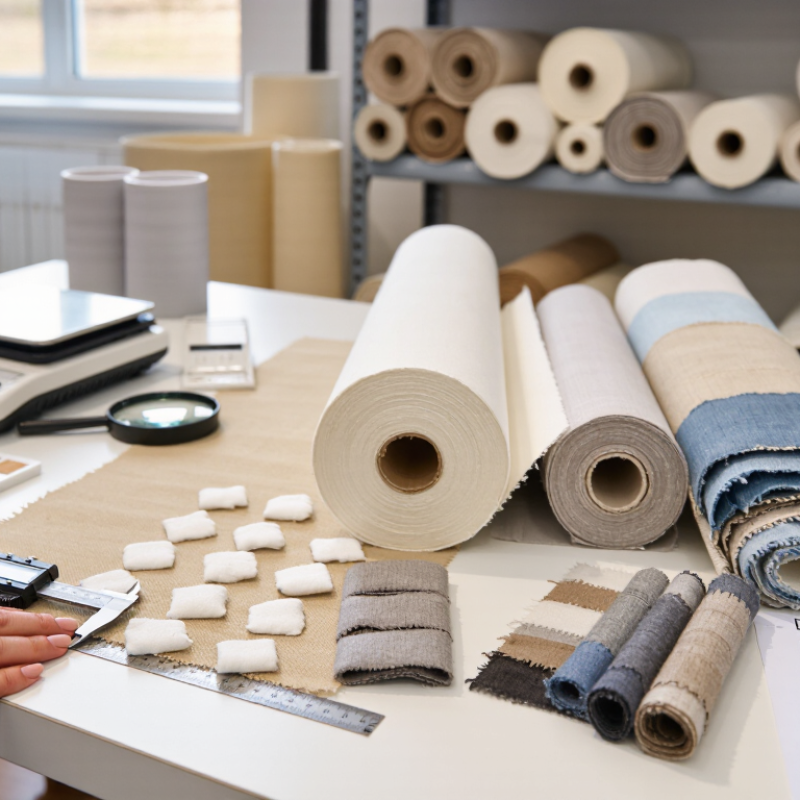
Verify the fiber content first. Ask for composition percentages, test records, and production notes. A laboratory blend analysis is safer than relying on a handwritten label. Check GSM using a calibrated cutter and scale, following the principles of ASTM D3776. Measure fabric width from usable edge to usable edge, not from selvage to selvage. Record the narrowest point across several rolls. Small differences can disrupt garment markers.
Quantity needs equal attention. Weigh rolls individually, then separate gross weight from usable fabric. Inspect for stains, mildew odor, shade variation, holes, edge damage, and long creases. Photograph defects beside a ruler. Textile Exchange also reports that polyester remained the dominant fiber globally in 2023, so recycled claims deserve extra verification. Request chain-of-custody documents when recycled content affects purchasing decisions. A few rolls may pass inspection while others fail. I have seen estimates become unreliable after repacking, so buyers should reserve a testing allowance and approve a physical sample before committing to the full lot.
What Is Free Fabric and How Can Buyers Source It? — Verify Supply: Check Fiber Content, GSM, Width, Quantity, and Condition
Free fabric may be offered as surplus, remnants, or unused inventory at no charge; buyers should confirm whether packing, handling, or transport costs apply. The examples below are illustrative inspection scenarios, not verified offers or market listings. Confirm specifications against the actual lot before accepting it.
| Example Lot |
Fiber Content |
Weight (GSM) |
Usable Width |
Available Quantity |
Observed Condition |
What to Verify Before Collection |
| Plain woven cotton |
100% cotton, supplier-declared |
145 g/m² |
150 cm |
120 m, continuous roll |
New surplus; roll ends may have light handling marks |
Check fiber claim, shade consistency, usable length, and whether edge damage reduces the stated width. |
| Polyester-cotton twill |
65% polyester / 35% cotton, supplier-declared |
240 g/m² |
147 cm |
85 m across two rolls |
Unused stock; minor differences in shade between rolls |
Inspect each roll separately and confirm the quantity and shade variation are acceptable for the intended use. |
| Jersey knit |
95% cotton / 5% elastane, supplier-declared |
200 g/m² |
160 cm tubular; 80 cm when laid flat |
60 kg, mixed roll lengths |
Surplus fabric; some rolls have creasing from storage |
Confirm whether width is measured flat or tubular, check stretch recovery, and ask for roll-by-roll lengths. |
| Polyester lining |
100% polyester, supplier-declared |
75 g/m² |
145 cm |
300 m, three rolls |
Unused rolls; outer packaging is dusty but fabric appears protected |
Open a sample section to check for stains, odor, discoloration, and damage beneath the outer layers. |
| Woven linen blend |
55% linen / 45% cotton, supplier-declared |
190 g/m² |
140 cm |
42 m, remnants in varied lengths |
Cut remnants; edges may be uneven and lengths vary |
Measure each piece, separate usable lengths from offcuts, and confirm the fiber composition if labeling matters. |
Calculate True Cost: Include Freight, Sorting, Testing, and Material Waste
Free fabric is rarely free after it leaves the warehouse. In practical sourcing, buyers should calculate landed cost per usable kilogram, not per donated roll. Include freight, unloading, storage, sorting labor, testing, and disposal fees. A $0.00 fabric invoice can still become expensive.
Consider a 1,000-kilogram shipment. If freight costs $0.35 per kilogram, transport adds $350. Sorting may reject 15% because of stains, mixed fibers, or damaged edges. Testing adds another cost, especially when fiber content, colorfastness, or restricted substances require verification. If only 850 kilograms pass inspection, every usable kilogram costs more. The arithmetic is simple. The assumptions are not.
Textile Exchange reported 116 million tonnes of global fiber production in 2022, showing the scale of material movement and waste. The Ellen MacArthur Foundation also reported that less than 1% of clothing fibers were recycled into new clothing. These figures make sorting and recovery decisions commercially important, not merely environmental. Buyers should request roll photos, weight records, fiber declarations, and test samples before booking freight. Small sample checks can still miss hidden defects. That is an uncomfortable limitation. A better estimate includes a waste reserve, often 10% to 20%, then updates the model after the first delivery.
Source Responsibly: Use Textile Exchange Standards and Traceable Supplier Records
What Is Free Fabric and How Can Buyers Source It?
Free fabric often means donated rolls, production leftovers, samples, or unused stock offered without a purchase price. The material is not truly cost-free. Buyers still need to check transport, storage, testing, and sorting expenses. A roll may look clean while hiding shade differences, weak edges, or uncertain fiber content. Ask for the fabric type, available quantity, width, weight, and original production date. Request clear photographs of labels, cartons, and roll ends.
Responsible sourcing requires more than a low price. Use current Textile Exchange standards as a reference for preferred fibers, recycled content, and chain-of-custody claims. Confirm whether the supplier holds a valid scope certificate. Ask for transaction records linked to the specific material. These documents should identify the certified site, material volume, lot number, and processing stage. A certificate alone does not prove every roll meets the claim.
Keep a traceable supplier file. Store purchase records, fiber test reports, shipment details, supplier declarations, and inspection photos. Match each document with an internal lot code. For example, “LOT-24-071” should connect the roll, invoice, test result, and warehouse record. In practice, records are sometimes incomplete. That weakness needs honest review, not a polished explanation. If origin data cannot be verified, describe the fabric as unverified surplus rather than certified material. Small inconsistencies can become serious claims problems later.