Sourcing Jacquard Polyester in 2026 requires more than comparing fabric prices. Buyers must examine fiber content, construction, finishing, certification, and factory performance. The pattern may look identical online, yet differ greatly in yarn quality, weight, abrasion resistance, and color stability.
Textile Exchange’s Materials Market Report 2024 states that global fiber production reached about 124 million tonnes in 2023. Polyester represented approximately 57% of total production. This scale explains its broad availability, but it also increases the need for responsible sourcing. The same report highlights continuing growth in recycled polyester, although recycled inputs remain uneven across markets. Data can guide decisions.
For Jacquard Polyester, a reliable sourcing process should begin with a technical specification sheet. Include fabric width, grams per square meter, yarn type, pattern repeat, Martindale performance, shrinkage, and colorfastness requirements. Ask mills for recent laboratory reports, not only showroom samples. Request production swatches under daylight and indoor lighting. Small flaws become expensive when repeated across thousands of meters.
Standards also matter. OEKO-TEX STANDARD 100 can help verify harmful-substance testing, while the Global Recycled Standard can support recycled-content and chain-of-custody claims. Certification alone is not proof of perfect performance. A supplier’s audit date, certificate scope, and actual production site require checking.
A low price can be a false saving.
This guide uses market evidence, practical textile checks, and supplier questions to shape a clearer 2026 sourcing strategy. Some published figures differ by methodology, and that limitation deserves attention. Good sourcing is not flawless. It is documented, tested, and willing to reconsider weak assumptions.
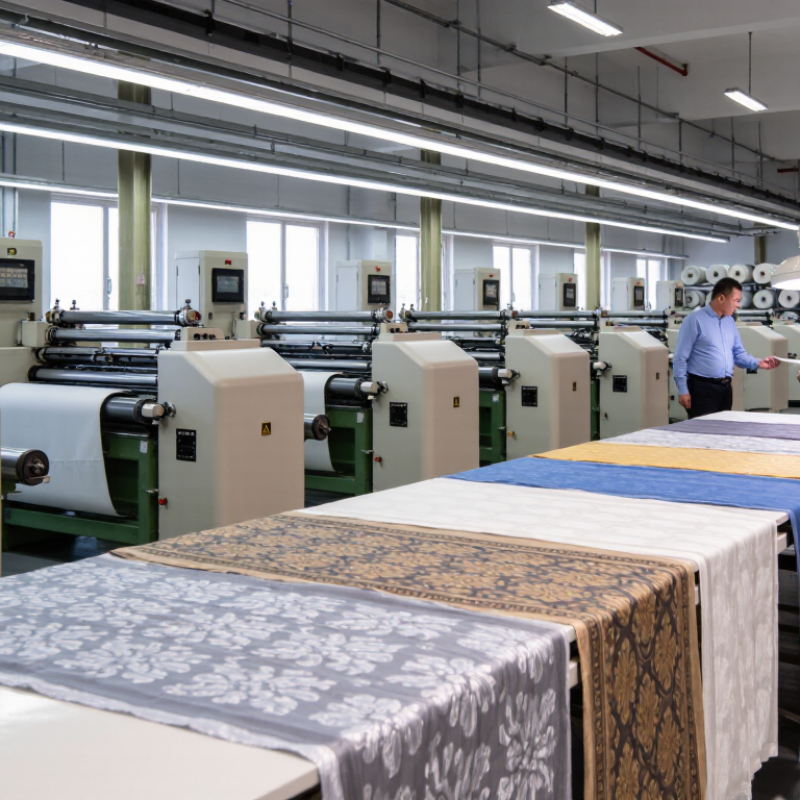
Jacquard polyester fabric is a woven material made from polyester yarns. Its pattern is formed during weaving, not printed onto the finished surface.
This process creates raised flowers, geometric lines, or quiet tonal textures. The design can appear on one side or both sides. Polyester adds strength, wrinkle resistance, and quick-drying performance. However, “polyester” alone says little about quality. Yarn fineness, filament type, density, and finishing methods change the fabric’s behavior.
From practical fabric evaluations, jacquard polyester usually feels more structured than plain polyester. It can hold a sharp silhouette in jackets, upholstery, bags, and decorative panels.
Dense constructions resist everyday abrasion, while loose constructions feel softer but may snag more easily. Surface sheen also varies. Smooth filaments can look bright, while textured yarns create a quieter appearance.
Colorfastness, dimensional stability, pilling resistance, and seam performance deserve testing. Touch is useful. It is not enough. Ask for GSM, width, composition, weave details, and test reports from the supplier.
When sourcing in 2026, request a cut length before approving bulk production. Examine the reverse side, pattern alignment, edge curling, and shade consistency under daylight.
Rub a damp white cloth across dark colors. Check whether the motif distorts after washing or steaming. A beautiful sample can hide uneven tension near the selvage. That problem is easy to miss.
Compare the fabric with its final use, climate, cleaning method, and expected wear. A heavy jacquard may impress in a showroom but feel unsuitable for warm clothing.
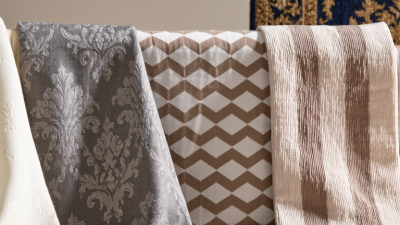
When sourcing jacquard polyester fabric in 2026, define the product application before contacting mills. End use controls selection. A lightweight blouse may require 80–120 GSM fabric with soft drape and breathable construction. Decorative cushions may need 180–260 GSM fabric with stronger abrasion resistance. Upholstery requires deeper evaluation, including seam slippage, tear strength, and repeated-rub performance.
I usually request a technical sheet, physical sample, and color standard together. The jacquard pattern should remain sharp after washing or steaming. Check yarn composition, fabric width, weight tolerance, shrinkage, and pilling resistance. For apparel, test colorfastness to washing, rubbing, perspiration, and light. For curtains, examine dimensional stability and light exposure. For bags, inspect edge fraying and handle stress. Small details matter. A fabric can look luxurious but fail during cutting.
Ask the supplier how the fabric is woven, finished, inspected, and packed. Reliable documentation should connect test results with the actual production lot. Accredited laboratory reports provide stronger evidence than unsupported claims. Request a pre-production sample before approving bulk manufacturing. I once judged a fabric by its front surface alone, then noticed weak backing during stitching. That mistake was avoidable. Also compare sample weight with bulk rolls, because finishing can alter handle and thickness. Leave room for review; the first specification is rarely perfect.
How to Source Jacquard Polyester Fabric in 2026?
Sourcing jacquard polyester requires more than comparing quoted prices. Textile Exchange’s Materials Market Report 2024 states that polyester represented 57% of global fiber production in 2023. Total fiber production reached 124 million tonnes. That scale makes traceability and capacity checks essential. Ask suppliers for mill addresses, monthly output, yarn sources, and recent test records. A video tour helps, but it is not an audit. Request samples from the same production line planned for bulk orders.
Evaluate manufacturing discipline through measurable controls. Confirm GSM tolerance, width stability, colorfastness, snag resistance, and dimensional change after washing. ISO 9001 supports documented quality systems, while ISO 14001 addresses environmental management. Certificates matter only when their scope matches the actual mill. Check calibration dates and corrective-action records. Small details expose weak systems. The data may still be incomplete.
Customization should be written as a technical sheet, not a mood board. Define yarn denier, weave density, jacquard repeat, color references, finish, width, GSM, and acceptable defects. Approve a lab dip and a one-to-three-meter pilot before bulk production. Ask how pattern registration is controlled across rolls. The WTO’s World Trade Statistical Review 2024 recorded a 1.2% decline in global merchandise trade volume during 2023, reinforcing the need for realistic delivery buffers. I have seen attractive samples fail after washing. That risk deserves testing, not optimism. Allow time for shade correction and reweaving.
When sourcing jacquard polyester fabric in 2026, compare construction before comparing price. Request a 30-by-30-centimeter sample from every supplier. Check the reverse side, yarn density, pattern definition, and surface evenness under daylight. A dense weave should feel stable, not stiff or plastic-like. Record the fabric weight, width, composition, and finishing process on one comparison sheet. Ask for test results covering colorfastness, dimensional stability, abrasion, and snagging. A beautiful sample can still fail after cutting.
Pricing usually changes with yarn quality, pattern complexity, dyeing, finishing, and order volume. Ask whether quotations include inspection, packing, and delivery to your destination. Minimum orders may range from a few hundred meters to several thousand. Negotiate a smaller trial order when possible, but expect a higher unit cost. My first comparison focused too heavily on the lowest quotation. The fabric later showed uneven highlights across the roll. That mistake was expensive.
Lead times need separate figures for sampling, production, and reorders. Standard patterns may ship faster, while custom designs require artwork approval and loom scheduling. Request a written production timeline with milestone dates. Confirm whether greige fabric is available before approving the order. Keep extra time for shade approval and third-party inspection. A realistic plan often needs four to eight weeks after final approval. Do not rely on “ready soon.” Ask for dated evidence, such as a sample dispatch record or production photograph. Keep one approved sample sealed for later comparison.
A reliable 2026 sourcing process starts with physical sample verification. Request a production-grade cutting, not only a showroom swatch. Check the jacquard pattern under daylight and warm indoor light. Measure width, weight, thickness, and pattern repeat. Test shrinkage after washing, colorfastness after rubbing, and snag resistance on a simple metal hook. The first sample is not enough. I once approved a fabric with excellent surface detail, but its backing curled after washing.
Ask the supplier for current test reports matching the exact fabric construction. Useful documents may include fiber-content testing, colorfastness results, restricted-substance testing, and recycled-content verification when applicable. Check the laboratory date, sample code, composition, and production lot. A certificate with no traceable fabric reference creates uncertainty. Document every result in a shared approval sheet, including photographs and measured tolerances.
Your 2026 supply terms should be written with equal precision. Confirm MOQ, sample charges, production lead time, monthly capacity, payment milestones, packaging, inspection rights, and delivery terms. Define acceptable limits for GSM, width, shade variation, and pattern alignment. Request a pre-shipment sample from the actual bulk lot. Keep a small reserve for delays. Forecasts can be wrong. That weakness should be discussed openly, not hidden behind optimistic delivery promises. Reconfirm pricing before bulk production, especially when yarn and energy costs change.