Jacquard Polyester fabric is defined by patterns woven into the cloth, rather than printed onto its surface. That construction can create raised textures, crisp motifs, and detailed designs. The term covers many looks, though. A floral jacquard for curtains may feel very different from a compact geometric weave for upholstery. Small details matter.
Common types include floral, damask, geometric, stripe, abstract, and brocade-inspired designs. Floral patterns often bring softer, decorative detail to cushions or drapery. Damask typically uses balanced motifs and contrast between matte and reflective yarns. Geometric and stripe designs can give furniture or accessories a more structured appearance. Abstract motifs offer looser forms, while brocade-inspired fabrics may use dense patterns and a richer surface. These labels describe visual styles, not fixed performance levels.
Choosing among them calls for more than a glance at a product photo. Check the fabric’s weight, weave density, backing, pattern repeat, and care instructions. For upholstery, ask for abrasion or durability information suited to the intended use. For curtains, consider how the cloth hangs and filters light. A pattern name alone can mislead. Even two floral fabrics may differ in thickness, texture, and color accuracy. Samples help reveal those differences, although lighting can still change how a shade appears. This guide explores the main types of Jacquard Polyester and the practical details that can help match each one to a project.
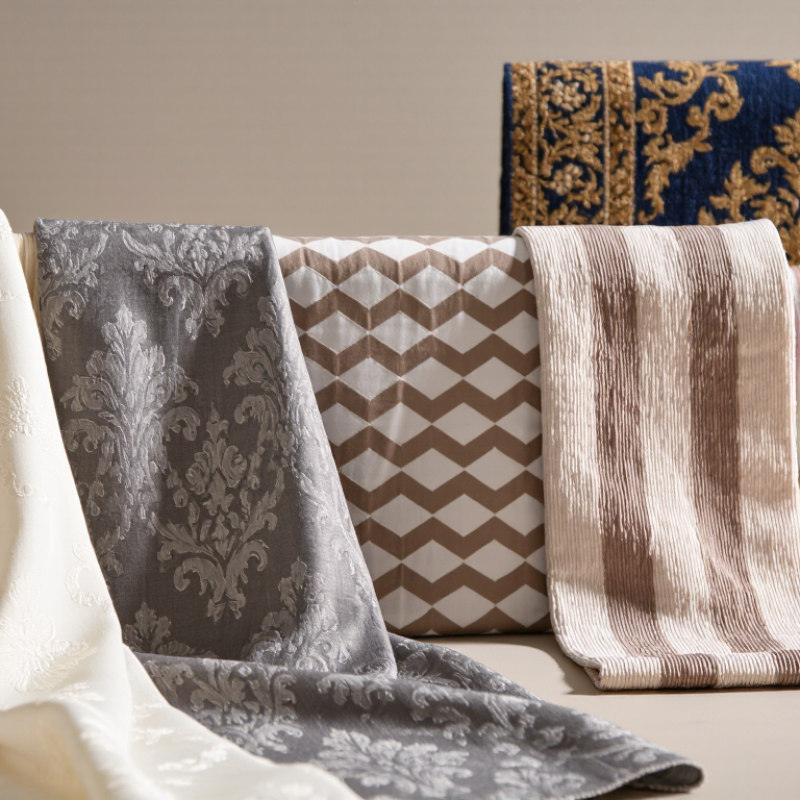
Jacquard polyester gets its pattern from the loom, not from ink applied afterward. During weaving, the loom lifts selected warp yarns as the weft passes across them. This lets yarns form detailed motifs directly in the cloth. Small details matter. A leaf, for example, may appear raised because its threads follow a different path from the background.
Damask and brocade are familiar pattern styles often woven on Jacquard looms. Damask commonly uses contrasting weave effects for a subtle, reversible design. Brocade tends to have more pronounced motifs, sometimes with extra floating yarns that add texture. The back can reveal loose floats or a less distinct pattern; inspect a sample before choosing fabric for a visible lining. Polyester yarns hold color well and can produce crisp details, but dense designs may feel stiff or trap warmth. That trade-off is easy to miss in a small swatch. Look closely under good light, and handle the fabric rather than judging its pattern from a picture alone.

Jacquard polyester is defined by how its pattern is woven, not printed. The main types differ in surface texture, reverse appearance, and weight. Damask usually has a smooth face with subtle contrast between matte and lustrous areas. Its pattern may appear on both sides, though the reverse often looks less distinct. Look closely.
Brocade tends to feel more dimensional. Its woven motifs can sit slightly above the ground, giving flowers or scrolls a raised look. It often feels heavier than damask and may drape less softly. Tapestry-style jacquard uses more complex, picture-like designs and several colors. The back can show loose floats or a less tidy version of the front. Feel the reverse.
Matelassé jacquard creates a padded, quilted appearance through woven structures, not necessarily added filling. It has gentle ridges and a softer visual depth, making it useful for coverlets or decorative cushions. These labels are not perfectly consistent across sellers; one mill’s “brocade” may resemble another’s textured jacquard. When choosing fabric, check a physical swatch in daylight. Rub the surface lightly, bend it, and see whether the pattern catches or flattens under pressure. The distinction matters more in hand and drape than in a product name.
Polyester jacquard describes fabric woven with patterns, not a single texture or design. Its motifs come from the weave rather than surface printing. Common versions include damask, brocade, matelassé, and tone-on-tone floral or geometric designs. The exact appearance depends on yarn, weave structure, and finishing.
Damask usually has a smooth hand and contrasting sheen, often with reversible floral or geometric motifs. Brocade tends to look more decorative, with raised-looking patterns and a richer surface. Matelassé has a subtly padded, quilted appearance, though the texture is woven rather than necessarily filled. Some designs use small repeating shapes. Others feature large, elaborate motifs. The names are not always used consistently in shops, so checking a close-up image or fabric sample can prevent confusion.
For curtains, upholstery, or table linens, consider both the pattern scale and the fabric’s weight. A dense brocade may feel too formal for a light summer garment, while a finer jacquard can drape more easily. Polyester is generally quick-drying and resistant to wrinkles, but heat can damage some finishes. Care labels matter. I would not judge softness from a product photo alone; a swatch reveals texture and stiffness much better.
Damask, brocade, and matelassé are all woven on jacquard looms, but their surfaces behave differently. Damask usually forms a reversible pattern through contrasting satin and sateen effects. Run a hand across it, and the motif feels mostly flat. Brocade adds supplementary yarns to create raised, often ornate designs. Its reverse may show loose floats or a less polished pattern. Matelassé creates a cushioned, quilt-like surface through layered weaving and differences in yarn tension. It can look padded without containing separate stuffing.
The boundary is not always tidy. Some fabrics combine methods, so inspect both sides and feel the raised areas before choosing. For curtains, damask often hangs smoothly; brocade brings stronger relief, while matelassé suits upholstery or bedding that benefits from texture. Polyester can help fabrics resist creasing, though finishing and yarn construction matter too.
The material is widely used: Textile Exchange’s Materials Market Report 2024 estimates polyester made up 57% of global fiber production in 2023. That figure covers all polyester fibers, not jacquard alone. A useful distinction, but not a guarantee of quality. Check fabric weight, pattern definition, and care instructions on the actual sample.
How Do Damask, Brocade, and Matelassé Jacquards Differ?
Typical woven construction is shown: damask and brocade commonly use a single ground cloth, while woven matelassé commonly uses a double-cloth structure to create a raised, padded appearance. Constructions can vary; brocade patterns may also use supplementary weft yarns.
Jacquard polyester finds its place through pattern, weight, and finish. Dense floral or damask designs suit curtains and decorative cushions, where raised-looking motifs catch window light. Heavier versions can cover dining chairs or hotel headboards, especially when backed for stability. Geometric jacquards work well on sofa panels and room dividers. Lightweight designs are used for blouses, linings, and tote bags, where drape matters more than abrasion resistance.
The scale of polyester helps explain its wide availability. Textile Exchange’s Materials Market Report 2024 estimates global fiber production reached 124 million tonnes in 2023, with polyester accounting for 57%. That figure covers polyester fibers broadly, not jacquard fabric alone. For practical selection, check the fabric’s weight, backing, and abrasion test results; a striking pattern does not guarantee durable upholstery. Still, no single specification predicts how a fabric will perform in every room.
Tips: Rub a sample against a chair edge and view it in daylight before ordering. For upholstery, ask for relevant abrasion-test results. For curtains, check how the fabric hangs; dense patterns can feel heavier than expected.
| Type | Typical Construction and Appearance | Common Uses | Selection Notes |
|---|---|---|---|
| Damask Jacquard | Usually a woven fabric with patterns created through contrasting weave structures, often giving the design a subtle sheen against a matte background. The pattern may be visible on both sides, though the reverse can look different. | Table linens, curtains, decorative cushions, and formal interior furnishings. | Choose it when a refined, relatively flat pattern is preferred. Check the fabric weight and drape for the intended use. |
| Brocade Jacquard | Features elaborate designs that can appear raised or textured, often formed with supplementary yarns woven into the fabric. Polyester brocades may imitate the decorative look of traditional figured fabrics. | Occasionwear, costumes, decorative cushions, and statement upholstery details. | Its textured surface can be more visually prominent than damask. Review snag resistance and care instructions before selecting it for frequent-use applications. |
| Matelassé Jacquard | A woven, often double-cloth construction that creates a quilted or padded-looking relief. The dimensional effect is generally produced by the weave rather than by a separate layer of filling. | Bedspreads, coverlets, lightweight throws, and decorative bedding panels. | Useful when a raised, cushioned appearance is wanted without the bulk of a separately padded fabric. Actual thickness and warmth vary by construction. |
| Tapestry-Style Jacquard | A decorative woven fabric with detailed motifs and multiple colors. Polyester yarns can be used to create intricate pictures, florals, or traditional ornamental designs. | Upholstery accents, cushions, wall coverings, bags, and decorative panels. | Heavier versions are suited to furnishing applications; lighter versions may work for accessories. Confirm abrasion performance when using it on furniture. |
| Satin Jacquard | Combines a jacquard pattern with satin-style weave areas, producing a smooth surface and a noticeable contrast between lustrous and less reflective parts of the design. | Eveningwear, blouses, dress linings, decorative drapes, and special-occasion textiles. | The surface can show light and creases distinctly. Consider garment structure and care requirements when choosing it for apparel. |
| Geometric or Floral Jacquard | Describes the woven motif rather than a single construction. Polyester jacquard fabrics in this category can range from lightweight apparel cloth to heavier furnishing material. | Shirts, dresses, skirts, curtains, cushions, and other home décor items. | Match the fabric weight, drape, and surface texture to the end use; the motif alone does not indicate durability or thickness. |
| Jacquard Knit | A knitted fabric in which patterned areas are formed during knitting. Polyester jacquard knits can have stretch and a softer hand than many woven jacquards. | Sportswear, sweaters, dresses, tops, and patterned knit accessories. | Check stretch, recovery, and fabric weight. These properties depend on the knit structure and fiber blend, not just the jacquard pattern. |