Inquiry
Form loading...
Choosing the right Lining Fabric supplier now requires more than comparing prices. Global buyers must examine fibre content, dye consistency, testing systems, and delivery reliability. A smooth polyester lining may look attractive under showroom lights. Its weak seam performance can appear only after repeated wear.
Textile Exchange’s Materials Market Report 2024 reported 124 million tonnes of global fibre production in 2023. It expects production to approach 160 million tonnes by 2030. This growth increases pressure on suppliers to document recycled content, chemical management, and traceable sourcing. Those details matter for garment brands facing stricter customer expectations and changing disclosure requirements.
Claire Bergkamp, former Director of Climate+ at Textile Exchange, stated, “We cannot recycle our way out of overproduction.” Her warning applies directly to lining procurement. Buyers should question unnecessary specifications, excessive sampling, and disposable packaging. Better decisions begin before the purchase order.
Quality remains practical. Ask for weight, width, shrinkage, colourfastness, tear strength, and seam-slippage results. Request recent laboratory reports, not only supplier promises. Check whether the factory can maintain the same hand feel across production batches. Small differences can distort a jacket’s drape, pocket shape, or sleeve movement.
This guide reviews leading Lining Fabric suppliers for global buyers in 2026. It considers product range, manufacturing capacity, certifications, customization, export experience, and communication. No ranking is perfect. Supplier performance can change by region, season, and order size. Therefore, treat this list as a research starting point, then verify samples, audits, and commercial terms independently. Reliability is earned through evidence, not polished catalogues.
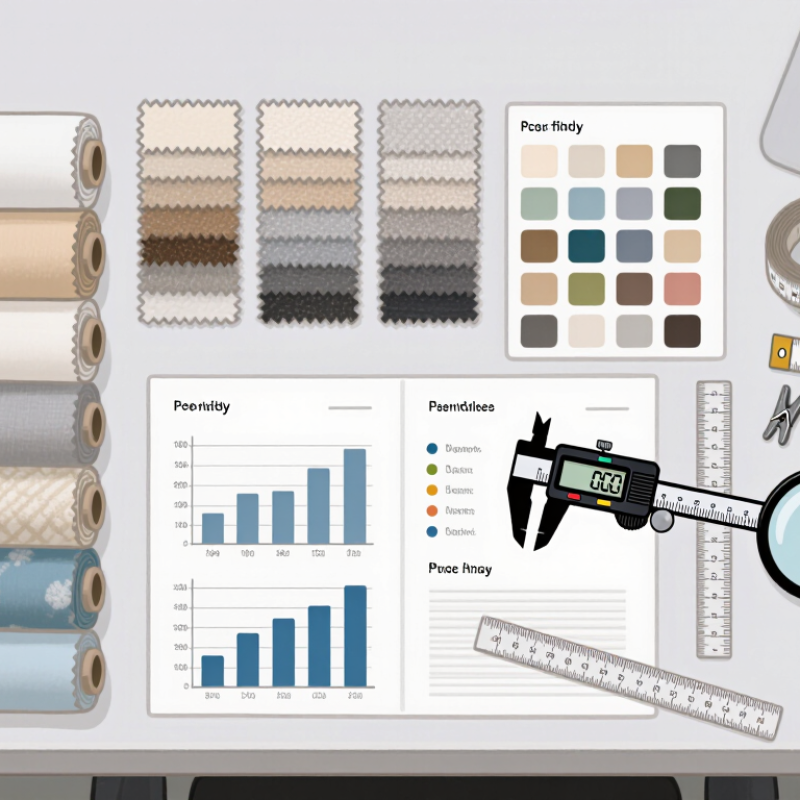
Lining fabric selection in 2026 starts with fiber behavior, not a supplier directory. Polyester remains practical for jackets, uniforms, and bags because it dries quickly and holds color. Acetate offers a softer, cooler hand, but it needs careful washing guidance. Viscose improves drape and reduces a plastic feel, although moisture can affect dimensional stability. Recycled fibers may support purchasing goals, yet buyers should request chain-of-custody records and test reports. “Eco” alone proves little.
Construction changes the garment’s performance. Plain weave linings are stable and economical for daily tailoring. Twill resists abrasion in pockets and workwear. Satin slides easily over shirts, but snagging can appear around sharp seams. Knit linings suit stretch garments and active silhouettes. During sampling, check seam slippage, pilling, colorfastness, shrinkage, and static after realistic use. A supplier should provide consistent lab data, clear tolerances, and retained shade standards.
Global buyers now need more than attractive swatches. Ask about minimum order quantities, greige stock, dye-house capacity, lead times, carton protection, and multilingual technical support. Confirm compliance documents for the destination market, not only a general certificate. Small details matter: a 150-centimeter width may become 147 after finishing. That difference affects cutting plans. Digital color approval saves time, but physical bulk samples remain essential. I have seen accurate screens hide a warmer undertone. No process is perfect. Leave room for inspection, corrective action, and honest review when the first production run disappoints.
| Fiber / Material Group | Common Construction | Typical Basis Weight* | Typical Performance Profile | Main Product Uses | 2026 Buyer Priorities | Recommended Verification |
|---|---|---|---|---|---|---|
| Viscose / Rayon | Plain weave, twill, satin, and jacquard | 55–120 g/m² | Soft hand, good drape, breathable feel, smooth surface, but comparatively lower wet strength and dimensional stability than polyester | Suit linings, dresses, skirts, lightweight jackets, and premium apparel | Traceable cellulosic feedstock, low-impact processing, colorfastness, and consistent shrinkage control | Fiber composition, dimensional change, colorfastness to rubbing and perspiration, pH, and restricted-substance testing |
| Acetate | Plain weave, satin, twill, and printed lining constructions | 60–110 g/m² | Silky appearance, smooth garment slip, elegant drape, low moisture regain, and good comfort in formalwear | Tailoring, formalwear, coats, jackets, handbags, and luxury-style garments | Smoothness, anti-static treatment, controlled print quality, reliable shade matching, and documented chemical compliance | Surface friction or slip evaluation, snag resistance, colorfastness, dimensional stability, and chemical compliance documentation |
| Polyester | Plain weave, taffeta, satin, pongee, twill, and warp-knit constructions | 50–150 g/m² | High strength, good abrasion resistance, quick drying, stable dimensions, and broad dyeing capability; may require anti-static finishing | Mass-market apparel, outerwear, uniforms, sportswear, bags, and technical garments | Competitive landed cost, consistent bulk quality, recycled-content options, anti-static performance, and shorter replenishment cycles | Recycled-content chain of custody where applicable, abrasion, tear strength, colorfastness, pilling, and restricted-substance testing |
| Recycled Polyester | Plain weave, taffeta, satin, twill, mesh, and recycled filament linings | 50–150 g/m² | Performance broadly comparable to conventional polyester when correctly engineered, with potential variation in shade, filament uniformity, or hand | Apparel, bags, footwear components, uniforms, and products with recycled-material targets | Verified recycled content, traceability, dependable quality between lots, clear environmental claims, and recyclability planning | Valid recycled-content certification, polymer identification, colorfastness, abrasion, pilling, and chemical testing |
| Cupro / Regenerated Cellulosic | Fine plain weave, satin, twill, and lightweight knit | 50–100 g/m² | Very smooth hand, fluid drape, comfortable moisture management, and premium garment slip | Premium jackets, dresses, trousers, skirts, and refined casualwear | Reliable supply continuity, responsible chemical management, premium hand feel, and clear end-of-life information | Supplier process audit, fiber identification, dimensional stability, colorfastness, pH, and restricted-substance testing |
| Nylon / Polyamide | Warp knit, tricot, plain weave, ripstop, and stretch-blend constructions | 45–130 g/m² | High strength-to-weight ratio, strong abrasion resistance, smooth surface, and useful stretch when blended with elastane | Sportswear, activewear, lingerie, luggage, technical apparel, and durable outerwear | Lightweight durability, low-noise hand, stretch recovery, recycled polyamide options, and performance consistency | Tensile and tear strength, abrasion, stretch recovery, colorfastness, snagging, and recycled-content verification where claimed |
| Cotton | Plain weave, voile, poplin, twill, and lightweight brushed constructions | 70–160 g/m² | Breathable, absorbent, comfortable, and relatively easy to sew; usually less slippery and more crease-prone than filament linings | Casualwear, workwear, childrenswear, unstructured jackets, and natural-fiber garments | Responsible agricultural sourcing, softness, wash stability, dependable shade range, and transparent fiber claims | Fiber content, shrinkage, colorfastness, pH, formaldehyde where relevant, and applicable responsible-sourcing documentation |
| Blended Linings | Polyester/viscose, polyester/cotton, nylon/elastane, and other engineered blends | 60–180 g/m² | Balances slip, strength, comfort, stretch, moisture behavior, cost, and dimensional stability according to blend ratio | Tailoring, uniforms, stretch garments, workwear, fashion apparel, and performance products | Accurate blend declaration, compatible care performance, easy sourcing, and material choices aligned with recycling strategies | Quantitative fiber analysis, stretch and recovery, shrinkage, abrasion, colorfastness, and full chemical compliance testing |
| Stretch Lining | Warp knit or woven base with elastane; two-way or four-way stretch | 80–180 g/m² | Improves mobility and garment comfort; requires controlled recovery, dimensional stability, and seam compatibility | Stretch suits, fitted dresses, trousers, sportswear, uniforms, and performance apparel | Recovery after repeated extension, compatibility with shell fabric, low bagging, and stable heat-setting quality | Stretch percentage, recovery after repeated cycles, laundering stability, seam slippage, pilling, and colorfastness |
| Technical / Functional Lining | Coated woven, laminated, mesh, quilted, brushed, antistatic, or moisture-management constructions | 90–250 g/m² | Designed for specific functions such as insulation, moisture transfer, wind resistance, antistatic behavior, or enhanced durability | Outdoor clothing, protective workwear, uniforms, luggage, footwear, and specialty equipment | Verified functional claims, safer chemistry, durability over the intended service life, repairability, and transparent test methods | Function-specific laboratory testing, coating or laminate durability, hydrostatic pressure where relevant, abrasion, and restricted-substance testing |