inquiry
Inquiry
Form loading...

7 Tips for Choosing Spandex Polyester Material?

Choosing Spandex Polyester Material is not simply a matter of picking the stretchiest fabric. It is a performance decision involving fiber content, recovery, weight, finishing, and end use. A yoga legging, medical support garment, and swim short face different demands. The fabric must respond accordingly.

Industry data shows why this decision deserves care. Textile Exchange’s Materials Market Report 2024 reported that polyester represented about 59% of global fiber production in 2023. Grand View Research also projects continued growth in the global spandex market through 2030. These figures suggest strong demand, but they do not guarantee quality. A low-cost blend may lose recovery after repeated washing. A heavier fabric may feel durable yet become uncomfortable during movement.

Textile sustainability expert Dr. Seshadri Ramkumar has said, “Sustainability is not a destination; it is a journey.” That principle applies to Spandex Polyester Material selection. Check stretch and recovery after testing. Inspect surface pilling under friction. Ask whether recycled polyester has credible certification, rather than trusting a vague label. Consider dye performance, moisture management, seam behavior, and production consistency.

The details matter.

A supplier’s sample can look excellent under showroom lighting, then fail after ten washes. I have found that technical sheets rarely tell the whole story. This is where buyers must question assumptions. The following seven tips examine practical tests, blend ratios, fabric weight, certifications, supplier reliability, and lifecycle concerns, helping teams choose with evidence instead of attractive claims.

7 Tips for Choosing Spandex Polyester Material?

Match Stretch Goals to ASTM D2594 Stretch-and-Recovery Testing

7 Tips for Choosing Spandex Polyester Material?

Choosing spandex polyester starts with the garment’s real movement. A yoga legging, fitted shirt, and compression panel need different stretch targets. ASTM D2594 evaluates stretch and recovery in knitted fabrics with low-power stretch. It can reveal whether fabric returns after extension, not merely how far it stretches.

Ask the laboratory to record extension percentage, recovery time, fabric direction, and test conditioning. A fabric reaching 50% extension may still leave visible growth around the knees. That is a practical warning. Compare both coursewise and walewise results, because knitted structures can behave differently across the body.

The 2024 Textile Exchange Materials Market Report estimated global fiber production at 124 million tonnes in 2023. Polyester accounted for about 57.7 million tonnes, showing its continuing industrial importance. Yet volume does not prove suitability. A higher polyester percentage can improve durability, while spandex content affects elasticity, fit, and recovery. The balance matters.

Request ASTM D2594 results before approving bulk material. Review elongation, residual growth, and recovery behavior after repeated cycles where possible. The standard may not fully represent heat, sweat, washing, or aggressive wear. That limitation deserves attention. Test finished garments too, especially waistbands and high-tension seams, because stitching can change the final stretch experience.
Select Polyester for Its ~0.4% Moisture Regain and Quick-Dry Needs

7 Tips for Choosing Spandex Polyester Material?

Select Polyester for Its ~0.4% Moisture Regain and Quick-Dry Needs

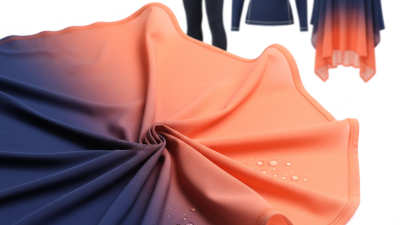
Polyester typically has a moisture regain of about 0.4%, so it absorbs very little water. That helps fabric dry quickly after washing, sweating, or light rain. In practical testing, a polyester-spandex sample often feels lighter after a short air-drying period. Still, quick drying depends on more than fiber content. Fabric weight, knit structure, yarn thickness, and finishing treatments all matter.

Tip 1: Check the blend ratio carefully. More spandex can improve stretch and recovery, but it may change drying time and fabric stability. Tip 2: Ask for moisture-management test data, not only marketing claims. A simple wash-and-dry comparison can reveal useful differences. Record drying time, fabric weight, and surface feel.

For active clothing, choose a breathable construction with open channels or a lighter knit. A dense fabric may trap heat, even when its polyester fiber dries quickly. I once selected a lightweight sample that dried fast but felt uncomfortable against damp skin. That was a useful mistake. Softness, stretch recovery, and color stability deserve equal attention. Tip 3: Test the material after repeated washing. Performance can decline, especially when finishes are poorly matched to the fabric. Examine the sample under movement, not only on a flat table. Good selection requires evidence, careful handling, and a willingness to revise the first decision.

Balance Spandex Content: Common Blends Range from 5% to 20%

Choosing a spandex-polyester blend starts with the movement your garment must support. Spandex provides stretch and recovery, while polyester adds strength, shape stability, and easier care. Common blends contain 5% to 20% spandex. That range is broad. A 5% blend may suit fitted shirts, light uniforms, or trousers needing modest comfort. It usually feels stable rather than highly elastic. For cycling shorts, dancewear, or close-fitting garments, 15% to 20% can provide a more flexible fit.

5% to 20% spandex

A 5% blend may suit fitted shirts, light uniforms, or trousers needing modest comfort.

Do not judge the percentage alone. A fabric with 10% spandex can perform differently because yarn quality, knit structure, and finishing methods also matter. Check four-way stretch when movement matters. Measure recovery after pulling the fabric to 30 centimeters, then observe whether it returns close to its original length. Ask for test data on colorfastness, abrasion, pilling, and shrinkage. In practical sampling, I prefer washing a swatch three times before approval. One test is not enough.

Test the actual garment Consider body movement, washing temperature, drying method, and seam construction.

Higher spandex content may improve comfort, but it can increase cost and complicate heat control during production. Excessive tension may also create unwanted shine or uneven seams. I once underestimated recovery needs in a fitted sample, and the waistband loosened after repeated wear. That mistake changed my fitting process. Test the actual garment, not only the fabric roll.

Consider body movement, washing temperature, drying method, and seam construction. A balanced blend should stretch when needed and remain dependable afterward.

Check GSM, Abrasion, and Seam Performance Against End-Use Demands

7 Tips for Choosing Spandex Polyester Material

Check GSM, abrasion, and seam performance against the product’s actual end use. Start with the end use. Lightweight fabric may suit base layers, but it can fail under backpacks or repeated washing. Heavier GSM often improves coverage and shape retention, yet it may reduce breathability and increase drying time. Measure the fabric, not just the supplier’s specification sheet. Small variations can affect fit.

Abrasion testing should match real contact points, such as seat panels, waistbands, or sports equipment. Look for surface fuzzing, broken yarns, and color loss after repeated rubbing. Seam performance deserves equal attention. Stretch the sewn sample across and along the seam, then inspect skipped stitches, puckering, and thread breakage. A fabric can pass a stretch test while its seam fails. That mistake is easy to miss.

Use a finished garment sample when possible. Test it after washing, heat exposure, and several wear cycles. Record recovery, width change, and comfort against skin. Do not guess. Polyester content, spandex percentage, knit structure, and finishing chemistry all influence performance. In practice, a fabric with excellent laboratory results may feel too warm or restrictive in daily use. I have seen teams choose high GSM for durability, then revise the design after users complained about limited movement. End-use testing should challenge the original choice.

7 Tips for Choosing Spandex Polyester Material? - Check GSM, Abrasion, and Seam Performance Against End-Use Demands
Tip Selection Dimension Practical Target or Reference Range What to Check Suitable End Uses Purchasing Decision
1 Fabric Weight (GSM) Lightweight: 120–180 g/m²
Midweight: 180–260 g/m²
Heavyweight: 260–350+ g/m²
Measure mass per unit area from conditioned fabric samples. Confirm whether the quoted GSM applies to finished, washed, or greige fabric. Lightweight: base layers, fashion tops, and warm-weather garments.
Midweight: leggings, swimwear, and training apparel.
Heavyweight: compression garments, uniforms, and high-coverage activewear.
Select the lowest GSM that still provides the required coverage, opacity, durability, and warmth. Higher GSM generally increases coverage but can reduce breathability.
2 Fiber Composition and Stretch Common constructions contain approximately 5–20% elastane with polyester as the principal fiber. Two-way or four-way stretch depends on knit construction and yarn arrangement. Record polyester/elastane percentages, stretch direction, widthwise and lengthwise elongation, and recovery after repeated extension. Evaluate the fabric after laundering, not only in its new condition. 5–8% elastane: moderate comfort stretch and shape retention.
10–20% elastane: closer fit, compression, dancewear, and high-mobility garments.
Match stretch level to the pattern and intended fit. Avoid choosing a high-elastane fabric solely for softness; excessive stretch can increase bagging and sewing difficulty.
3 Abrasion Resistance Use the end-use requirement rather than a universal pass value. A practical screening program may compare samples at 5,000, 10,000, and 20,000+ cycles. Use a recognized abrasion method such as ASTM D4966 or ISO 12947. Inspect for holes, yarn breakage, surface fuzzing, color change, and elastane exposure. Lower exposure: tops and casual garments.
Higher exposure: leggings, seat panels, workwear, sports uniforms, and garments contacting equipment or rough surfaces.
Set a minimum cycle level and failure definition before sampling. A fabric that looks smooth initially may still fail through thinning or elastane damage.
4 Seam and Burst Performance Seam strength and seam slippage must remain adequate after the fabric is stretched in the garment direction. No single strength value is suitable for every product. Test fabric tensile strength, seam strength, seam slippage, and bursting strength using applicable methods such as ISO 13935, ISO 13936, or ASTM D6797. Test both new and laundered specimens. High priority for compression wear, swimwear, cycling apparel, uniforms, and close-fitting garments exposed to repeated movement. Approve the fabric together with the intended stitch type, seam allowance, thread, and SPI. A strong fabric can still fail if the seam construction is unsuitable.
5 Pilling and Surface Appearance Target a low pilling grade after the required number of cycles. Many apparel specifications use a visual rating scale from 1 to 5, with 5 representing the best appearance retention. Evaluate pilling using a recognized method such as ISO 12945 or ASTM D3512, and inspect fuzzing, snagging, shine, and shade change after abrasion and washing. High importance for leggings, brushed activewear, fleece-backed fabrics, and garments exposed to backpacks, seats, or repeated rubbing. Compare face and back surfaces separately. Brushing, loose fibers, and some textured constructions can improve hand feel while increasing pilling risk.
6 Colorfastness and Care Stability Define minimum ratings for washing, perspiration, water, rubbing, and light according to the product market and color risk. Dark and neon shades usually require closer review. Use applicable methods such as ISO 105 or AATCC procedures. Check dimensional change, spirality, shade change, staining, and stretch recovery after the specified care cycles. Essential for swimwear, sportswear, underwear, uniforms, and products exposed to sweat, chlorine, frequent washing, or sunlight. Approve the exact color and finish, not only a white or undyed base fabric. Include care-label instructions that reflect actual test results.
7 Moisture Management and Comfort Assess air permeability, moisture transfer, drying time, hand feel, and thermal comfort together. A heavier fabric may offer coverage but can dry more slowly. Measure air permeability where relevant and assess moisture management using a recognized textile method such as AATCC TM195. Conduct wear trials under realistic temperature and activity conditions. High priority for running, gym, cycling, outdoor work, and warm-weather garments. Softer, less compressive options may be preferable for leisurewear and base layers. Balance wicking claims with actual drying and comfort data. Confirm that chemical finishes remain effective after repeated laundering and do not create an unwanted hand feel.

Confirm Colorfastness and Fiber Claims with ISO 105 and FTC Rules

Choosing spandex polyester material takes more than checking stretch, softness, and price. Ask for fiber percentages, test reports, and production-lot details. A useful sample should show the fabric before and after washing. Look closely at shade changes, streaks, and elastane recovery. Small defects matter.

For colorfastness, request results under relevant ISO 105 methods. ISO 105 is a family of methods, not one universal pass certificate. Washing, rubbing, perspiration, and light exposure can produce different results. Match each test to the garment’s intended use. Sportswear needs careful attention to sweat and repeated laundering. Dark shades often deserve extra scrutiny. Review the rating scale, specimen type, conditioning, and test date. A report without these details is incomplete. Repeat testing when the dye lot changes. That step is easy to skip.

For United States sales, FTC textile labeling rules require accurate generic fiber names and percentages. Do not describe a blend as “100% polyester” when it contains spandex. Keep supplier declarations, invoices, and test records aligned. Use the fiber name required for the target market. Marketing phrases like “eco,” “premium,” or “fade-proof” need evidence. Claims should match tested performance and care instructions. I would also compare the label with the actual composition. It sounds obvious. Yet paperwork and fabric sometimes disagree.