inquiry
Inquiry
Form loading...

How to Choose the Best Lining Textile for Clothing?

Choosing the right Lining Textile affects how a garment feels, hangs, and performs after repeated wear. A jacket lining should let sleeves slide smoothly over a shirt. A dress lining may need opacity, breathability, and a soft touch against skin. Small detail. Big consequence.

Textile Exchange’s Materials Market Report 2024 estimates that global fiber production reached 124 million tonnes in 2023. That figure covers all fibers, not lining fabrics, but it shows the scale of material choices across the textile industry. Fashion Revolution co-founder Orsola de Castro’s often-cited reminder is, “The most sustainable garment is the one already in your wardrobe.” A durable lining can help a garment stay comfortable and wearable; it cannot, by itself, make a product sustainable.

There is no universally best option. I would not pretend there is. This guide compares common lining fibers and fabric constructions, including polyester, viscose, cotton, and cupro, through practical criteria. We will consider garment weight, friction, static, breathability, care instructions, and the way a lining behaves at seams. A fabric swatch may feel excellent in a shop, then wrinkle or cling after washing. Test it. Check it against the shell fabric, the intended use, and the care routine. Those small checks make a more reliable choice than relying on fiber names alone.
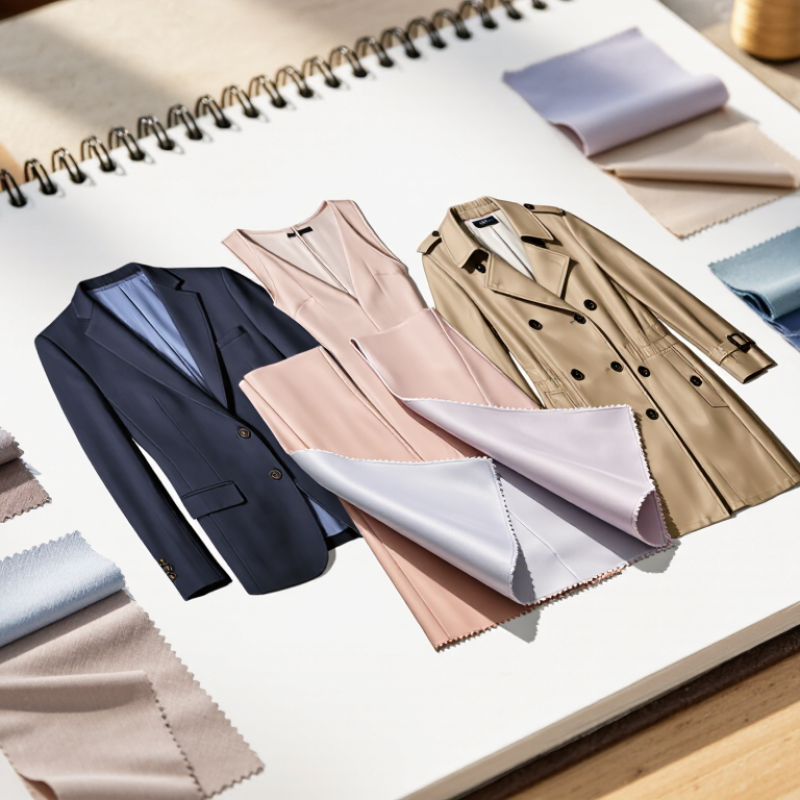
How to Choose the Best Lining Textile for Clothing?

Define Lining Requirements by Garment Use, Layering, Drape, and Climate

How to Choose the Best Lining Textile for Clothing?

Choose lining by how the garment will be worn, not by appearance alone. A jacket worn over sweaters needs room to slide smoothly, while a summer dress may benefit from a light, breathable lining. For trousers or fitted skirts, consider opacity and comfort during movement. A lining that feels fine on a fabric swatch can cling when worn over another layer. Test the combination. Walk, sit, and bend in it.

Drape matters, too. Soft, fluid outer fabric usually pairs well with a lining that moves easily without pulling the hem out of shape. Structured coats can take a firmer lining, provided it does not make the garment bulky. Climate changes the choice: breathable linings can feel more comfortable in warm, humid conditions, while a denser lining may add a little warmth in cool weather. It is not a substitute for insulation. Personal comfort varies.

Tips: Pin a lining swatch behind the outer fabric and check how both hang. Rub them together to spot static or snagging, then test them over the clothing you expect to wear. Check care instructions for both fabrics; mismatched washing needs can become a nuisance. If the garment is close-fitting, allow enough ease for the lining to move without straining seams. A small test may still miss how fabric behaves after a full day, so reassess the fit during a wear trial.
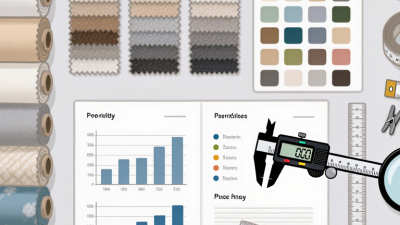
Compare Nominal Moisture Regain: Cotton 8.5%, Silk 11%, Wool 16%

When choosing a clothing lining, nominal moisture regain offers a useful starting point, not a complete comfort score. At common reference conditions, cotton is often listed near 8.5%, silk near 11%, and wool near 16%. These figures describe moisture absorbed by dry fiber relative to its weight; test conditions and fiber quality matter. Numbers need context. An 11% silk lining may feel smooth and light, while wool’s higher regain can help buffer moisture near the body.

Cotton linings can suit everyday garments, but they may hold dampness and crease after a warm commute. Silk can drape closely under a jacket, though delicate construction and care requirements may complicate wear. Wool can moderate short humidity swings, yet a dense weave may feel too warm in a heated room. Fit matters too. A loose, breathable lining may feel better than a fiber with a higher regain figure. It is tempting to treat the biggest number as the winner; that shortcut ignores fabric weight, weave, finish, and the outer fabric. A small swatch against the skin can reveal what the percentage cannot.

Choose Lining Weight in GSM and Verify It with ASTM D3776

Lining weight affects how a garment hangs, feels, and moves. GSM means grams per square metre, a useful way to compare fabric mass. It does not tell the whole story. A smooth 60 GSM lining may slide differently from a textured fabric with the same weight. Feel the sample. Check its drape, opacity, breathability, and friction against the shell fabric.

To verify GSM, use ASTM D3776, a standard test method for determining fabric mass per unit area. Take representative specimens from the lining, condition them consistently, and measure their area accurately. Weigh each specimen with a suitable balance, then calculate mass per square metre. Record the test method and results, including variation between specimens. For purchasing decisions with tight tolerances, a qualified textile laboratory can provide more controlled testing.

Compare the measured GSM with the garment’s needs, not just a supplier’s target. A lightweight lining can reduce bulk in a summer jacket, while a heavier option may improve coverage in a pale fabric. Still, GSM cannot predict comfort on its own. Construction, fibre, and finishing matter too. One limitation is easy to overlook: a small sample may not represent the whole roll. Check more than one area when consistency matters.

Check Colorfastness and Tensile Strength with ISO 105 and ASTM D5034

A lining should feel smooth, but touch alone cannot predict how it will wear. Textile Exchange’s Materials Market Report 2024 estimates global fiber production reached 124 million tonnes in 2023. At that scale, careful testing helps teams compare materials using evidence, not appearance alone. Check the fabric lot that will actually be used; dye depth and finishing can vary between batches.

For colorfastness, ISO 105-C06 evaluates color change and staining after washing; ISO 105-X12 assesses color transfer through rubbing. Ask the laboratory for the test method, conditions, and grey-scale ratings. A dark lining rubbing against a pale blouse can leave visible marks. Small details matter. There is no single pass score for every garment, so set acceptance limits around the intended use and care instructions.

For strength, ASTM D5034 measures grab tensile strength and records the force needed to rupture fabric. Request results in newtons, along with specimen direction and failure notes. Compare warp and weft: a lining may hold well in one direction and tear near a seam in another. I would not treat one strong result as a complete verdict. Sample seams and check wear after laundering, too; lab figures do not capture every snag, fit, or sewing condition.

How to Choose the Best Lining Textile for Clothing?

Compare colorfastness to rubbing (ISO 105-X12, gray scale grade 1–5) with grab tensile strength (ASTM D5034, newtons). Higher values indicate better performance on each measure.

Illustrative example values only—not published test results or guaranteed material specifications. Actual results depend on fabric construction, finishing, conditioning, and test procedure. Verify candidate fabrics using the applicable standards before selection.

Condition Fabric at ISO 139 Atmosphere: 20 ± 2°C and 65 ± 4% RH

When comparing lining textiles, condition every swatch in the same atmosphere before judging its hand, weight, or drape. ISO 139:2005 specifies 20 ± 2°C and 65 ± 4% relative humidity for standard textile conditioning and testing. Those numbers matter because fibers exchange moisture with surrounding air. A lining handled in a dry room may feel crisper than the same cloth after conditioning. Small differences can distort a close comparison.

Give samples time to settle, then record the room conditions and conditioning period alongside your notes. Keep swatches away from direct sunlight, heaters, and open windows. Check them together: does the lining slide smoothly against the shell fabric, or cling and bunch at the seam? ISO 5077 provides a method for measuring dimensional changes in fabrics after washing and drying, useful when lining stability matters. One detail is easy to miss. The standard atmosphere improves consistency, but it does not predict every wear condition. A garment may face damp commutes or warm interiors. I would still test the chosen lining with the actual shell fabric; a lab-controlled swatch cannot tell the whole story.

How to Choose the Best Lining Textile for Clothing? — Condition Fabric at ISO 139 Atmosphere: 20 ± 2°C and 65 ± 4% RH

Compare lining options by garment use, comfort, care requirements, and verified test results. The figures below are typical indicative ranges for commonly used fabrics; actual properties vary with fiber grade, yarn, weave, finish, and fabric construction.

Lining Textile Typical Fiber Content Typical Fabric Mass Moisture Regain of Fiber Typical Characteristics Common Garment Uses Care and Selection Notes
Polyester taffeta 100% polyester About 50–100 g/m² About 0.4% Lightweight, smooth, quick-drying, and generally resistant to shrinking and wrinkling. Breathability depends on the weave and any coating. Jackets, coats, skirts, trousers, and everyday apparel A versatile, economical option. Check for static cling and confirm that the lining’s care instructions match the garment.
Viscose lining 100% viscose, also called rayon About 70–120 g/m² About 11–13% Soft hand, good moisture absorption, and a fluid drape. It can wrinkle and may lose strength when wet. Dresses, skirts, suit jackets, and tailored garments Choose for a soft feel and drape. Check dimensional stability and follow the garment’s specified washing or dry-cleaning care.
Acetate lining Usually 100% acetate About 60–100 g/m² About 6–7% Smooth, lightweight, and drapable. Acetate is a manufactured cellulosic fiber and can be sensitive to heat and some solvents. Formalwear, dresses, suit jackets, and coat linings Use when a refined drape is desired. Check the care label and avoid assuming all acetate fabrics can be laundered in the same way.
Cupro lining 100% cupro, a regenerated cellulose fiber About 60–100 g/m² Commonly around 11–13% Smooth and fluid, with moisture absorption typical of regenerated cellulose fibers. Performance depends on fabric construction and finishing. Tailored jackets, suits, coats, and premium dresses A useful choice when a smooth, breathable-feeling lining is wanted. Verify care instructions and test the finished fabric for dimensional stability.
Cotton lining 100% cotton or a cotton blend About 90–150 g/m² About 7–8.5% Absorbent and comfortable against the skin, but generally less slippery than filament linings. It can crease and shrink if not properly treated. Casual jackets, children’s clothing, and unstructured garments Consider pre-shrunk or preconditioned fabric where dimensional stability matters. Confirm that the lining and shell have compatible care requirements.
Nylon (polyamide) taffeta 100% polyamide About 40–90 g/m² About 4% Lightweight and tough for its mass. Moisture absorption is lower than that of cellulosic fibers; heat sensitivity depends on the specific fabric. Outdoor jackets, sportswear, and lightweight outerwear Suitable where low mass and durability are priorities. Check heat-setting, coating, and care details for the actual fabric.

Conditioning atmosphere: ISO 139 specifies a standard textile testing atmosphere of 20 ± 2°C and 65 ± 4% relative humidity. Condition specimens in this atmosphere before testing, following the relevant test method and conditioning-to-equilibrium requirements.

For a reliable comparison: Use the same conditioning procedure for every sample. Select test methods appropriate to the property—for example, ISO 139 for conditioning, ISO 3801 for mass per unit area, and ISO 12947 for abrasion resistance. Results depend on fabric construction and should be measured on the actual material rather than inferred from fiber content alone.

Selection priority: Match the lining’s weight, drape, comfort, durability, and care requirements to the garment. Confirm compatibility with the shell fabric and assess the finished garment where possible.