inquiry
Inquiry
Form loading...

What Are the Top 10 Fabric Companies in China?

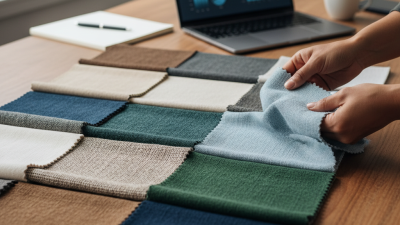
China’s fabric industry spans vast mills, specialist finishers, and export-focused manufacturers. For buyers, the challenge is not simply finding a low price. It is identifying suppliers with dependable quality, suitable certifications, clear communication, and the capacity to meet delivery schedules. A fabric swatch may feel smooth beneath the fingers, yet still behave differently after dyeing, washing, or cutting. Details matter.

Fashion designer Vivienne Westwood’s advice, “Buy less, choose well, make it last,” offers a useful lens for comparing fabric companies. It is not a technical specification, of course. But it points toward questions every sourcing team should ask: Where do materials come from? How consistent are color and weight across production runs? Can the supplier explain its testing and quality controls? For a Fabric Comp buyer, those answers can matter as much as a sample book or a polished showroom.

This guide introduces ten notable fabric companies in China and the capabilities that may set them apart, from cotton and linen to synthetics and specialty textiles. The ranking should be treated as a starting point, not a universal verdict. Company performance can change, and public information may not reveal every production limitation. That part is easy to overlook. Compare current samples, confirm specifications in writing, and assess each manufacturer against your product, volume, and timeline before making a commitment.
What Are the Top 10 Fabric Companies in China?

Understanding China's Fabric Manufacturing Landscape

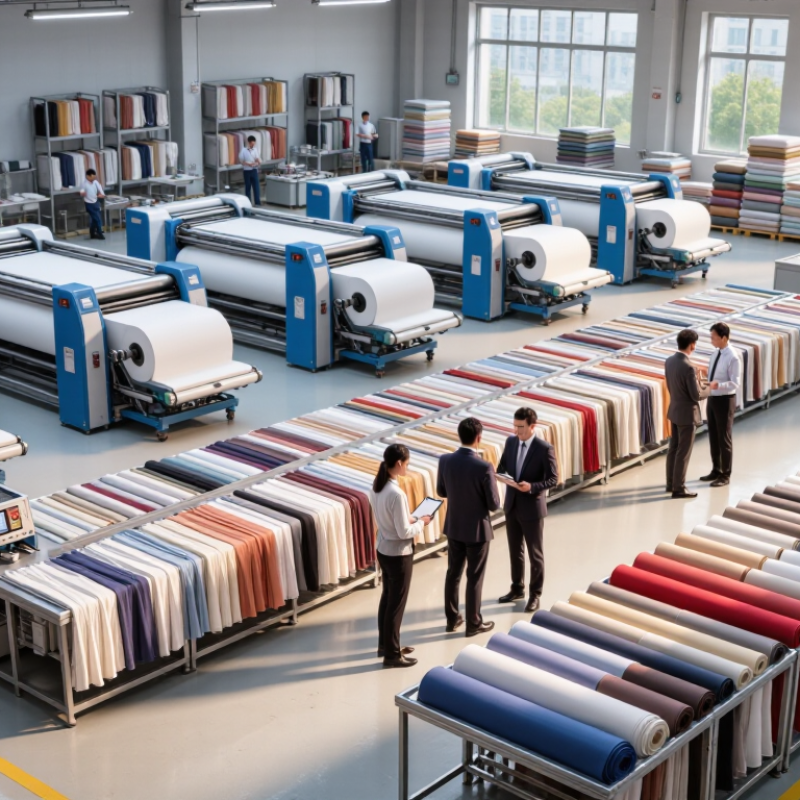
China’s fabric manufacturing landscape is broad, with regional clusters, deep supplier networks, and mills specializing in different materials. A top-ten list can be a useful starting point, but it rarely shows which factory fits a particular project. What matters? Consider the mill’s main fabrics, finishing equipment, minimum order quantities, and ability to reproduce a shade across production lots. Some suppliers focus on knitted fabrics or technical textiles; others produce woven cotton, synthetics, and blends. A sample room offers clues, not proof. Ask how the mill checks shrinkage, colorfastness, and fabric weight, then compare its records with the delivered rolls.

Reliable sourcing depends on evidence, not polished catalogues. Request recent test reports, clear specifications, and a small trial order before placing a large one. Check whether the stated fiber composition matches the product and whether washing changes its feel. Details matter. Clarify lead times, inspection stages, defect allowances, and handling of rejected fabric. China’s manufacturing scale offers considerable choice, but capabilities vary widely. A low quote may leave out testing, finishing, or packing costs. It is tempting to trust one attractive swatch; that shortcut can be misleading. Compare suppliers against measurable requirements, while leaving room to revise assumptions when production samples differ from expectations.
Criteria for Selecting the Top 10 Fabric Companies

Choosing leading fabric suppliers in China requires evidence, not polished catalogs. Start with product fit: fiber content, weave, weight, finish, and intended use. Ask for a recent sample and compare its hand, shade, and width with production records. Small details matter. A supplier’s ability to repeat results across dye lots may be more useful than a low quotation. Check monthly capacity, minimum order quantities, sample timing, and realistic shipping windows.

Assess quality systems through documented inspections, defect limits, and traceable batch records. For export orders, confirm that test methods and certificates match your requirements; a document alone proves little. Request reports for colorfastness, shrinkage, and abrasion when relevant. Look beyond claims. Ask how wastewater, chemical inputs, and subcontracting are monitored. Factory visits can help, while video audits and independent testing may fill gaps when travel is impractical. No scorecard is perfect. Weight each criterion according to the fabric’s use, and record exceptions rather than hiding them. A missed detail in an early sample can still happen.

Criteria for Selecting China’s Top 10 Fabric Companies

Suggested evaluation weights for comparing fabric manufacturers. These are assessment criteria, not company rankings or market-share data.

The framework prioritizes product quality and certifications, while also considering manufacturing capacity, sustainability, product range, export reach, and innovation. Adjust the weights to fit your sourcing requirements.

Profiles of 10 Leading Fabric Companies in China

China’s fabric sector is too diverse for one simple ranking. In 2023, textile enterprises above designated size recorded about 4.7 trillion yuan in operating revenue, according to National Bureau of Statistics data cited by the China National Textile and Apparel Council. Scale matters, but it does not prove quality. That distinction is easy to miss.

A useful set of ten company profiles would cover cotton shirting mills, denim weavers, linen specialists, wool suiting producers, knitted jersey makers, performance-fabric suppliers, recycled-fiber mills, home-textile weavers, jacquard specialists, and integrated dyeing-and-finishing manufacturers. Compare each by fabric weight, fiber composition, usable width, color consistency, minimum order quantity, and sample lead time. Ask for recent test results and a production sample; a polished swatch can hide uneven finishing. These profiles describe capabilities, not a verified ranking. Yet scale can mislead.

Tips: Request the same specification sheet from every supplier. Check shrinkage and colorfastness after washing, not just under showroom lights. Record tolerances in writing; small variations can affect cutting yields. A sample is helpful, but it cannot guarantee every production lot.

Comparing Products, Capabilities, and Markets

Comparing China’s leading ten fabric companies is more useful when the focus is on products, production capabilities, and markets. Some mills specialize in cotton shirting, denim, or knitted jersey; others offer polyester blends, performance fabrics, or furnishing textiles. A broad catalogue can be helpful, but it does not prove consistent quality. Ask for fabric weight, fiber composition, and test results for the exact item being considered.

Capabilities show up in practical details. Can the supplier match a shade across repeat orders? Can it handle small sample runs before larger production? Check finishing options, available machinery, quality-control steps, and typical lead times. Samples tell stories. A hand-feel assessment, close inspection of seams, and a wash test may reveal issues that a specification sheet misses. Not on paper.

Market fit matters too. Apparel exporters may prioritize color consistency and seasonal capacity, while home-textile buyers may need wider widths and durable finishes. Technical applications can require tighter performance testing and traceable specifications. A top-ten ranking can simplify research, but it may obscure differences between mills and trading firms. Capabilities also change over time. Verify claims directly, and compare like-for-like samples before choosing a supplier.

How to Choose the Right Chinese Fabric Supplier

A list of the top fabric companies in China can be a useful starting point, but rankings rarely show whether a supplier fits your product. A mill that excels at lightweight cotton may not handle dense upholstery fabric consistently. Start with your intended use, target price, fabric composition, and required monthly volume. Be specific.

Ask shortlisted suppliers for a current specification sheet, sample yardage, minimum order quantity, and production lead time. Check fabric weight, width, yarn content, shrinkage, and colorfastness against your requirements. A small swatch can look excellent under showroom lights, yet behave differently after washing. Test samples under realistic conditions before approving bulk production. If a supplier provides test reports, confirm that the tested material matches the fabric being quoted.

Communication matters, too. Send the same inquiry to each supplier and compare how clearly they answer questions about tolerances, dye-lot consistency, and shipment timing. Request references or arrange a factory audit when order size justifies the effort. Price is easy to compare; dependable quality is harder. I would not rely on a polished sample alone. Ask how rejected rolls are handled, and get agreed specifications in writing before production begins.

What Are the Top 10 Fabric Companies in China? - How to Choose the Right Chinese Fabric Supplier

Note: This is a fabric-category sourcing guide, not a ranking of individual companies. Fabric performance depends on fiber content, construction, finishing, and the agreed specification.

No. Fabric Category Typical Composition or Construction Key Quality Checks Common Applications Useful Supplier Documents
1 Cotton Woven Cotton yarns interlaced in constructions such as plain weave, twill, or poplin. Fiber content, fabric weight, width, shrinkage, colorfastness, and defects. Shirts, dresses, uniforms, bedding, and casual apparel. Fiber-content test, inspection report, and agreed fabric specification.
2 Polyester Woven Woven fabric made primarily from polyester yarns; may include textured or filament yarns. Fiber content, weight, width, color consistency, pilling, and dimensional stability. Apparel linings, uniforms, curtains, bags, and outdoor products. Fiber-content test, colorfastness results, and production sample approval.
3 Denim Usually a warp-faced twill fabric, commonly made from cotton or a cotton blend. Weight, width, shade consistency, shrinkage, skew or torque, and color transfer. Jeans, jackets, skirts, workwear, and accessories. Fabric specification, wash-test results, and shade-band approval.
4 Knitted Jersey Weft-knit fabric, often made from cotton, polyester, viscose, or blended yarns. Weight, width, stretch and recovery, spirality, shrinkage, and pilling. T-shirts, dresses, sleepwear, and lightweight sportswear. Composition test, dimensional-stability report, and approved hand-feel sample.
5 Fleece Knitted fabric with a brushed or raised surface; fiber content varies by product. Weight, surface shedding, pilling, shrinkage, colorfastness, and brushing consistency. Sweatshirts, jackets, blankets, and cold-weather accessories. Composition test, pilling results, and bulk-production sample approval.
6 Linen and Linen Blends Woven fabric containing flax fibers, sometimes blended with cotton or other fibers. Fiber composition, weight, width, shrinkage, color consistency, and visible slubs. Shirts, trousers, dresses, table linens, and home textiles. Fiber-content test, care-label guidance, and approved color or texture sample.
7 Silk and Silk Blends Woven or knitted fabric made from silk or a stated silk blend. Fiber content, weight, shade, surface defects, colorfastness, and care requirements. Blouses, scarves, dresses, accessories, and selected home textiles. Fiber-content test, colorfastness results, and written care instructions.
8 Wool and Wool Blends Woven or knitted fabric containing wool, sometimes blended with synthetic or other natural fibers. Fiber content, weight, pilling, shrinkage, colorfastness, and finishing consistency. Suits, coats, knitwear, uniforms, and blankets. Fiber-content test, dimensional-stability report, and care-label guidance.
9 Nylon and Technical Fabrics Woven or knitted fabrics using nylon or other specified fibers, sometimes with coatings or laminations. Fiber content, weight, tear or tensile strength, coating adhesion, and water resistance when specified. Outerwear, luggage, tents, bags, and performance products. Performance-test reports for the agreed requirements and coating or finish specification.
10 Nonwoven Fabric Fibers bonded into a sheet by mechanical, thermal, or chemical processes rather than conventional weaving or knitting. Weight, thickness, tensile strength, uniformity, and any application-specific barrier properties. Interlinings, filtration, hygiene products, packaging, and disposable products. Technical data sheet, composition details, and test reports matched to the intended use.