Inquiry
Form loading...
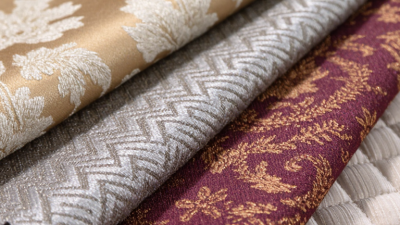
Global buyers need more than an attractive pattern when choosing Jacquard Polyester. The right fabric must suit its end use, production process, and expected care. A sofa cover, hotel curtain, and fashion lining place different demands on weight, drape, durability, and finish. Small sample checks can reveal what a catalog image cannot: raised motifs, color variation, and how the cloth feels under the hand.
William Morris, the influential British textile designer, offered a useful design principle: “Have nothing in your houses that you do not know to be useful, or believe to be beautiful.” He was not writing about modern polyester jacquard, but the idea still helps buyers weigh appearance against practical performance. A bold woven motif may look striking, yet it should also work with the product’s construction and care needs.
This guide examines Jacquard Polyester options through buyer-focused criteria, including weave appearance, fabric weight, color consistency, and supplier documentation. It also considers how to compare samples and ask precise questions before placing an order. There is no perfect roll. A softer hand may not deliver the structure a project needs, and a vivid pattern may look different in another light. That deserves a second look. The aim is not to declare one fabric best for everyone, but to help global buyers choose with clearer evidence and fewer assumptions.
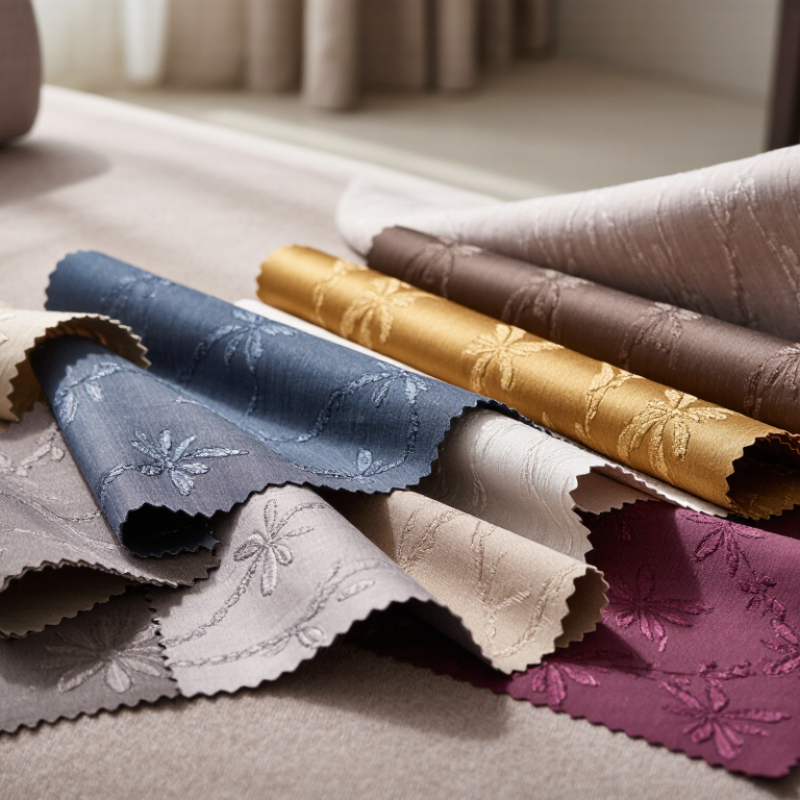
Jacquard polyester fabric is woven, not printed. Its pattern forms when selected warp and weft yarns interlace in different sequences. On a modern loom, digital pattern instructions control individual yarns, creating raised leaves, small grids, or crisp geometric repeats. The reverse often shows a related structure, though its appearance depends on the weave.
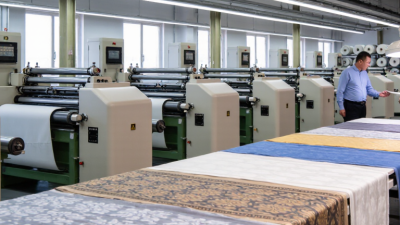
Polyester begins as polymer, then becomes filament or staple yarn through spinning and drawing. For jacquard, mills arrange yarns on the loom, set the design, and weave the cloth before finishing it. Heat setting can help stabilize the fabric; brushing or calendaring can change its surface. The result depends on yarn size, weave density, and finishing—not just the pattern file. Small changes matter.
Scale explains why polyester is widely available. Textile Exchange’s 2024 Materials Market Report estimates that global fiber production reached 124 million tonnes in 2023, with polyester making up about 57 percent. That figure covers fibers broadly, not jacquard fabric alone. Buyers should still inspect a physical swatch for drape, snagging, color consistency, and pattern alignment. A digital image cannot reveal stiffness. And a dense weave is not automatically durable; testing and intended use matter.
| Dimension | Typical Information | What Global Buyers Should Check |
|---|---|---|
| What jacquard polyester fabric is | A woven fabric made with polyester yarns in which a pattern is formed by controlling individual warp threads during weaving. The design is woven into the cloth rather than simply printed on its surface. | Ask whether the design is woven jacquard, printed, or a combination. Review a fabric swatch to confirm pattern definition, texture, and reverse-side appearance. |
| How the pattern is made | A jacquard mechanism, commonly controlled electronically on modern looms, lifts selected warp yarns in a programmed sequence. Weft yarns interlace with them to create the pattern. | Request a sample approval before bulk production. Pattern scale, repeat size, and fabric construction can affect appearance and material consumption. |
| Typical production sequence | Design preparation; yarn selection; warp preparation; jacquard weaving; fabric inspection; and, when required, dyeing, washing, heat setting, coating, or other finishing. | Confirm which processing steps are included in the quoted specification. Finishing can change fabric width, weight, hand feel, and performance. |
| Fiber content | May be 100% polyester or a polyester blend. Fiber content should be stated by percentage and verified against the applicable test or labeling requirements. | Specify the required composition and accepted tolerance. Do not rely on appearance or a general product description as proof of fiber content. |
| Yarn specification | Polyester yarn may be described by linear density, such as denier or decitex, and by filament or spun-yarn construction. The appropriate yarn depends on the intended texture and end use. | Include warp and weft yarn details in the technical specification when they are important to consistency, durability, or appearance. |
| Fabric weight | Lightweight apparel fabrics may be below about 150 g/m²; many furnishing fabrics are roughly 150–350 g/m². These are broad examples, not fixed category limits. | State the target weight in g/m² and the permitted tolerance. Compare samples measured using the same conditioning and test method. |
| Usable width | Available widths vary by loom, construction, and finishing. Common commercial widths can be around 140–150 cm, while wider constructions may also be available. | Confirm finished usable width, selvage treatment, and whether the stated width is measured before or after finishing. |
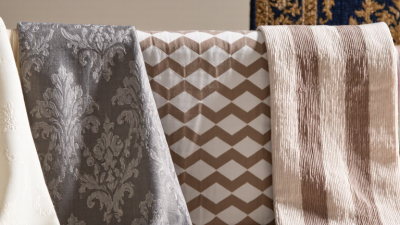
| Pattern and surface | Jacquard patterns can include geometric, floral, abstract, or textured effects. Depending on the weave, designs may be subtle, raised, reversible, or more pronounced on one side. | Approve the actual colorway and pattern repeat. Check alignment, motif placement, and shade consistency across multiple production rolls. |
| Coloration and finishing | Polyester fabric can be dyed, printed, or finished with treatments such as water-repellent coatings. Dyeing method and finish depend on yarn type, construction, and intended performance. | Ask for the exact finish and its expected durability. Request relevant test results rather than assuming a treatment is permanent or suitable for every use. |
| Common end uses | Depending on weight and construction, uses can include apparel, curtains, upholstery, decorative cushions, table coverings, and accessories. | Match construction and performance requirements to the end use. Upholstery and other regulated applications may require specific market-based testing. |
| Durability and care | Performance varies with yarn, weave, finishing, and care conditions. Relevant properties may include abrasion resistance, seam strength, dimensional stability, and colorfastness. | Specify the required test method and acceptance level for the destination market and application. Confirm care instructions with testing on the finished fabric. |
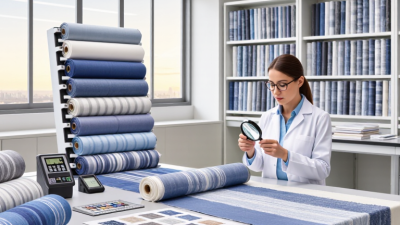
| Quality control | Inspection can assess defects, shade variation, width, weight, pattern consistency, and roll length. Testing may be performed by an in-house or independent laboratory. | Agree on inspection criteria, sampling plan, defect classification, and documentation before placing a bulk order. |
| Environmental and compliance information | Claims such as recycled content or restricted-substance compliance require appropriate documentation and, where relevant, independent verification. | Identify the destination market and applicable requirements. Request current certificates or test reports that cover the specific material and production scope. |
| Buyer-ready specification | A useful specification includes fiber composition, yarn details, weave or construction, pattern repeat, finished width, weight, color, finish, test requirements, and packaging. | Use one approved specification and reference sample for quotation, pre-production approval, inspection, and shipment documentation. |
Note: Weight, width, and end-use examples are indicative ranges only. Actual specifications vary by construction, finishing, and supplier; confirm requirements with a physical sample and documented test results.